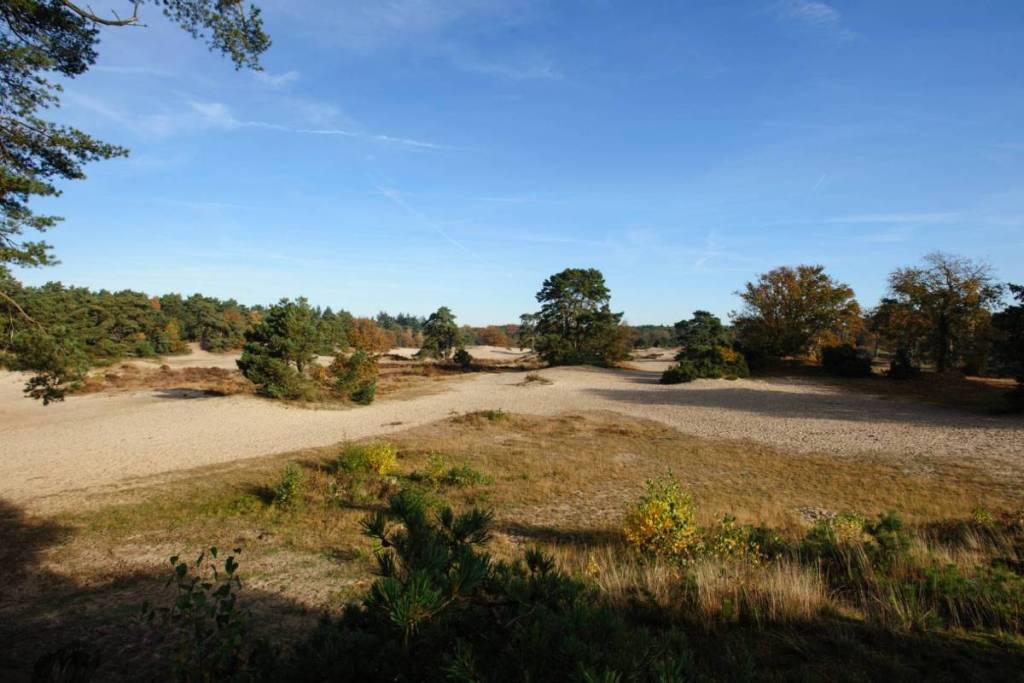

Anyone wandering through the dense forest of the Utrechtse Heuvelrug doesn’t expect to find a full-fledged desert. Yet rising from the Soesterduinen is a 500-hectare expanse of golden-yellow drifting sand. This unique nature reserve, formed during the Ice Age and transformed by centuries of human intervention, hides a fascinating mystery. In the middle of the drifting sand stand mysterious trees that seem to be literally climbing the dunes.
An Accidental Desert
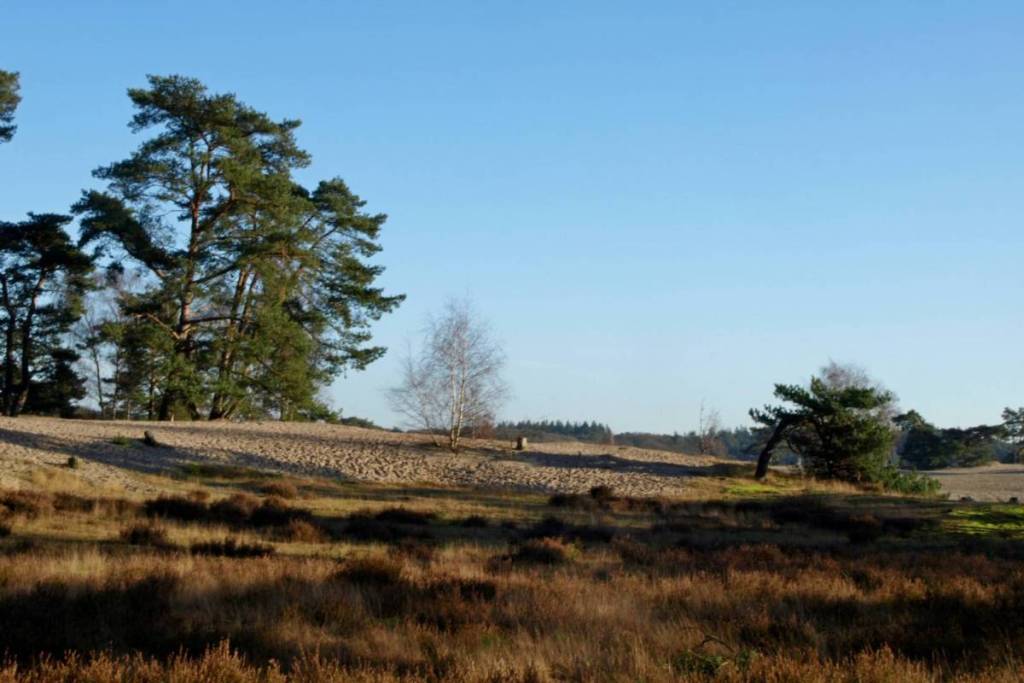
During the last ice age, harsh polar winds blew thick layers of sand toward the Utrechtse Heuvelrug. For centuries, a dense forest held the drifting sand firmly in place. It wasn’t until the late Middle Ages that the landscape changed dramatically.
People cut down trees on a massive scale and let their livestock graze on the heath. Without plants and roots, the wind had free rein. The sand began to drift so violently that panicked farmers had to erect wooden embankments to protect their fields from the advancing dunes.
This is how human activity unintentionally transformed the greenery into a Dutch desert. Today, the Korte and Lange Duinen form Utrecht’s largest sand drift, where the ice-age sand still blows freely.
The secret of the climbing trees
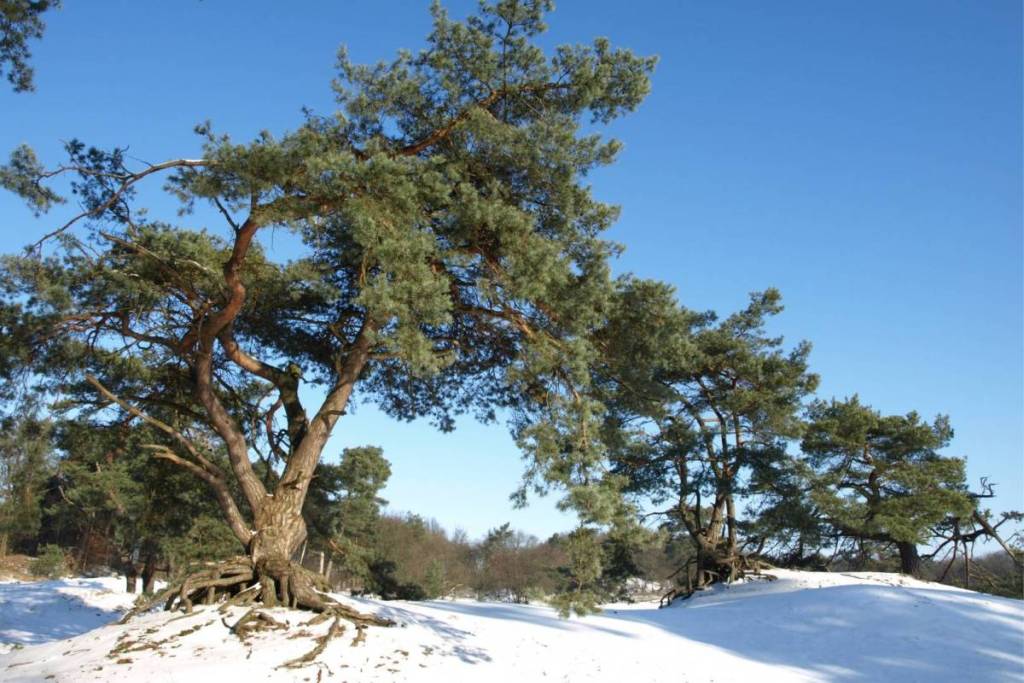
In the middle of the golden-yellow sandy plain, a remarkable botanical mystery unfolds. Anyone walking along the edges of the Soesterduinen will see gnarled trees that seem to be climbing their own sand dunes. These are the famous oak stumps, formed by a constant battle with the shifting sands.
Centuries ago, the shifting dunes buried young oak trees. Instead of dying, the branches grew new roots beneath the sand. When the wind subsequently blew the sand away again, the trees remained standing on raised roots. Together with rare lichens, this landscape forms a unique micro-ecosystem. It gives the area an almost fairy-tale-like atmosphere, where trees and wind exist in a perpetual balance.