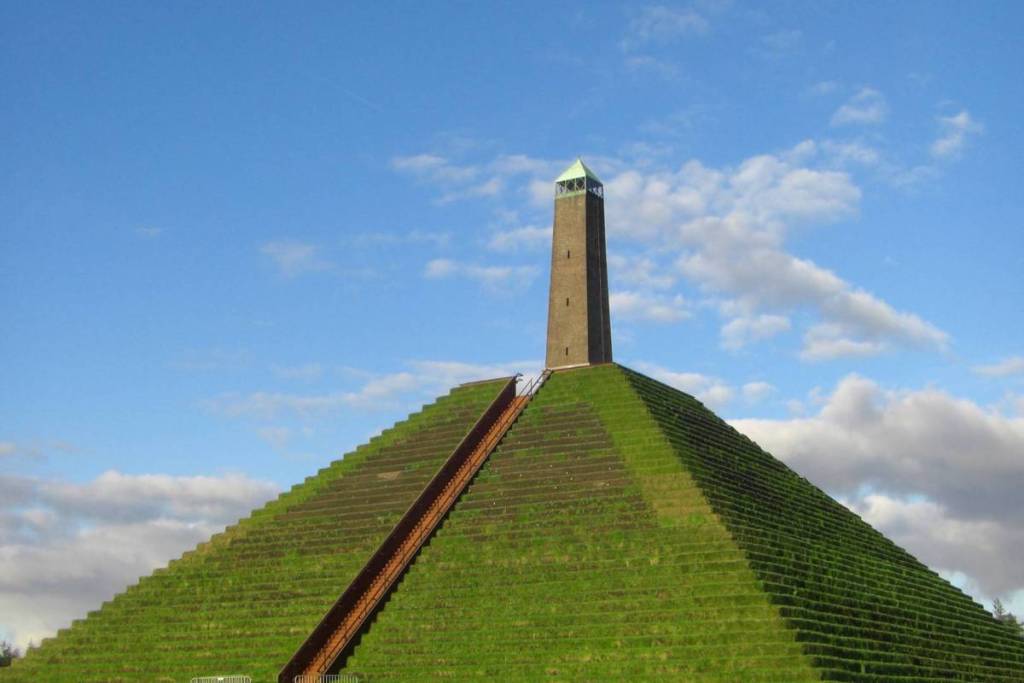

In the middle of the forests of the Utrechtse Heuvelrug stands one of the strangest national monuments in our country: the Pyramid of Austerlitz. In the fall of 1804, 18,000 French soldiers built this structure from the ground up in just 27 days. What began as an anti-boredom project for Napoleon’s army became a monument full of surprising stories.
How a French Army Camp Built a Pyramid in 27 Days
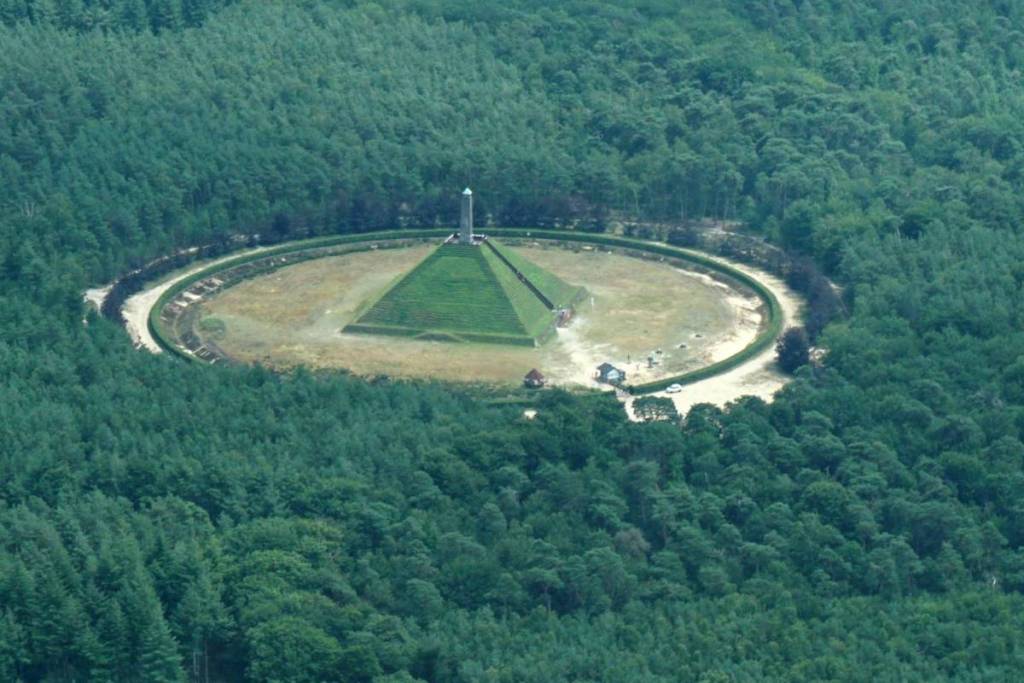
In the fall of 1804, General Auguste de Marmont set up camp on the heath near Zeist to establish “Camp d’Utrecht.” Here, he forged 18,000 French and Batavian soldiers into a well-oiled fighting machine, ready for a British invasion. When that threat failed to materialize, boredom set in among the troops.
To keep his army on its toes and demonstrate his admiration for Napoleon, De Marmont devised a striking project. Inspired by the Egyptian pyramids he had seen in Giza during his earlier campaign, he put his men to work. Using only shovels and wheelbarrows, the soldiers built a 36-meter-high sand mound in exactly 27 days, covered it with sod, and crowned it with a wooden obelisk.
Royal egos and a persistent location error

The proud General De Marmont originally named the impressive sand hill after himself: the Marmontberg. However, that name did not last long. In 1806, Louis Napoleon, the newly crowned King of Holland, intervened. Despite fierce protests from De Marmont, he renamed the structure the Pyramid of Austerlitz, as a tribute to his brother Napoleon’s glorious victory in Moravia.
At the same time, a persistent geographical confusion arose. Louis also named the nearby trading settlement near Zeist after the battle. As a result, many people automatically associate the monument with the village of Austerlitz or Zeist. Physically, however, the iconic pyramid stands squarely within the boundaries of the neighboring municipality of Woudenberg.
The battle against the elements: subsidence and a crooked obelisk
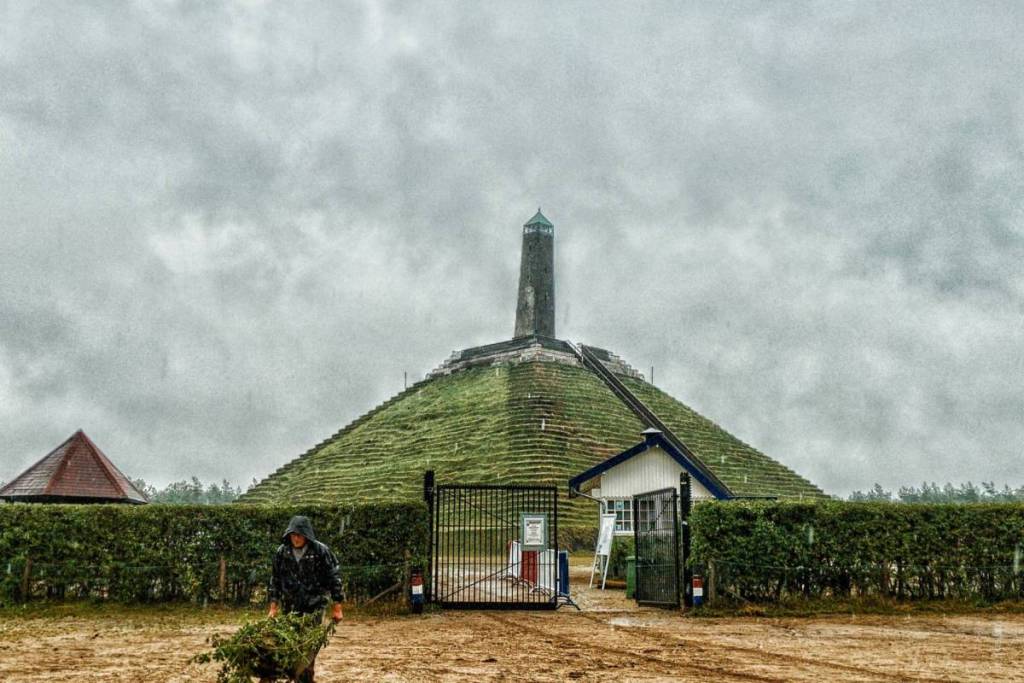
After the French departed, the sand monument quickly fell into disrepair. The original wooden obelisk leaned to one side due to the elements and was torn down in 1808. It wasn’t until 1894 that the mayor of Woudenberg had the hill restored and erected the current stone obelisk, which eventually began to lean as well.
Around the time of its 200th anniversary in 2004, the pyramid underwent a large-scale restoration, but the Dutch climate took its toll. Due to extreme drought and subsequent torrential downpours, entire sections of grass slid down the slope.
Ultimately, the sand hill was stabilized by driving hundreds of four-meter-long horizontal posts deep into its walls. The leaning obelisk was given a foundation but was deliberately left un straightened: as a lasting symbol of a turbulent history.