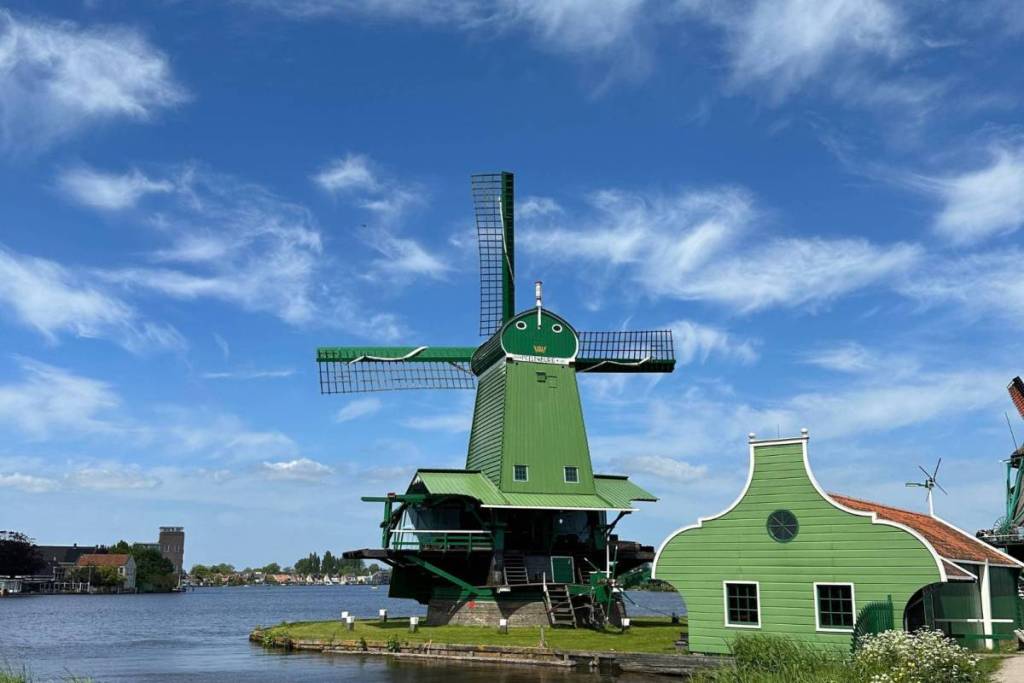

Every day, a pungent scent of fresh cocoa wafts past along the broad waters of the Zaan. This distinctive village scene is consistently ranked among the most beautiful villages in the Netherlands.
Anyone strolling among the creaking windmills and green facades immediately steps into the world’s oldest industrial area. What many people overlook, however, is that this 18th-century neighborhood was only brought together on flatbed trucks in the 1960s.
Europe’s very first industrial area
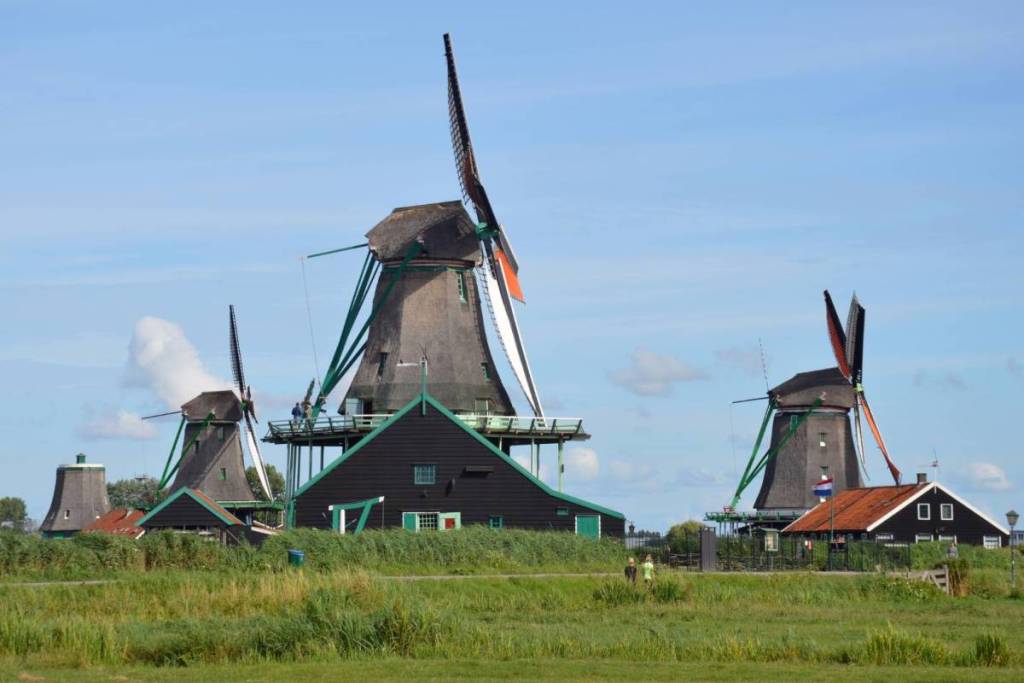
Three hundred years ago, the Zaan region was not a quiet polder village, but the bustling economic engine of the Netherlands. Driven by the constant polder wind, hundreds of wooden windmills here ran at full speed day and night.
They sawed oak for the VOC’s seagoing ships, ground rare pigments for paint, and pressed seeds for oil. To protect the marshy peat soil, craftsmen opted for lightweight wooden structures painted in the iconic green: the birth of the characteristic Zaan village landscape.
The origins of the iconic green village
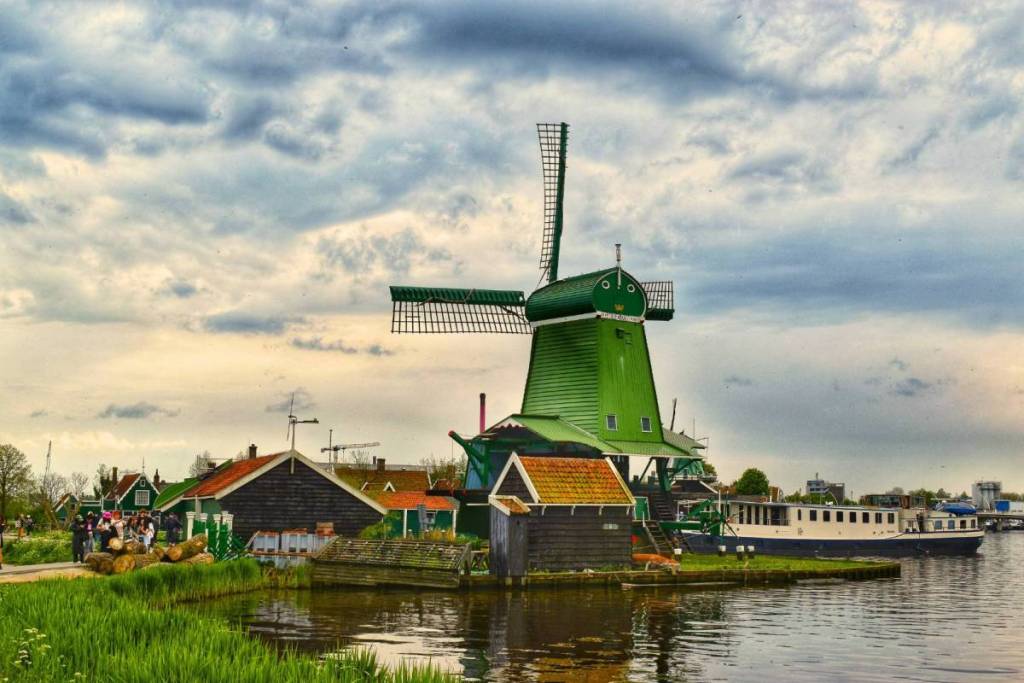
Anyone wandering through the Zaanse Schans would hardly suspect that this neighborhood was only created in the 1960s . To save the historic Zaan architecture from expansion plans and the wrecking ball, dozens of 18th-century national monuments were transported to the Kalverpolder on flatbed trucks and flat-bottomed barges.
What began as a bold rescue plan for endangered wooden houses grew into a protected village landscape. Even the village’s name is steeped in history. It commemorates the defensive fortification that William of Orange erected in 1574 against the Spanish.
A living monument in the heart of the Kalverpolder
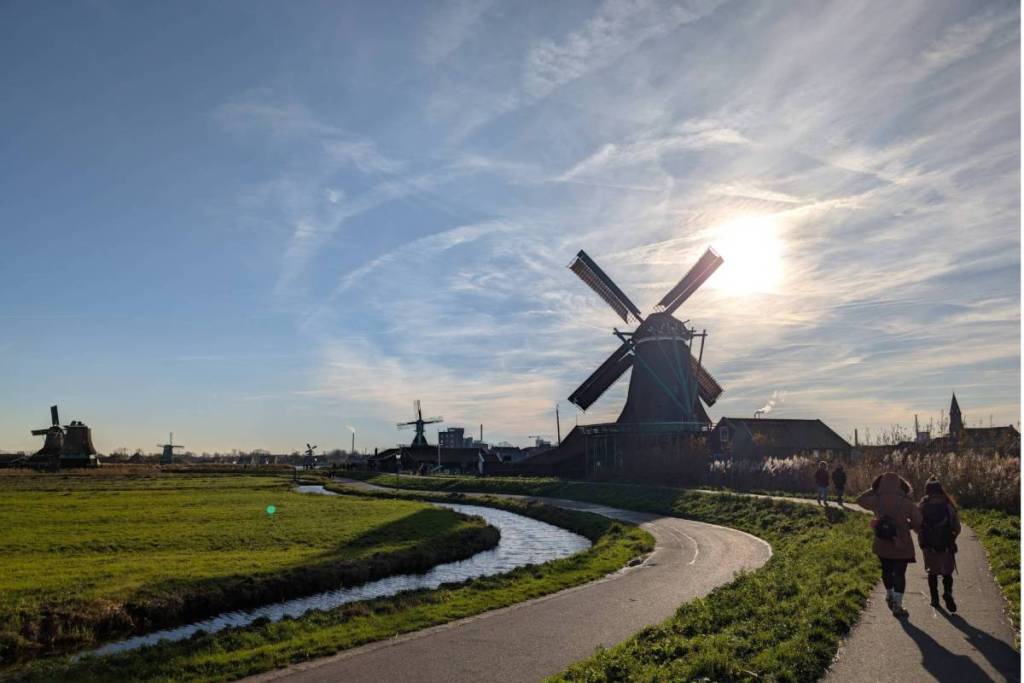
What makes the Zaanse Schans unique is that it is not a lifeless open-air museum. The historic wooden buildings are still home to residents of the Zaan region who bring the neighborhood to life every day, while artisans in the workshops continue to practicetraditional crafts and make cheese.
As you stroll among the historic facades, you’ll also catch the familiar sweet scent of cocoa wafting across the Zaan from the local chocolate industry. Combined with the babbling polder waters and the protected peat meadow landscape, you’ll feel as though you’ve stepped into a living piece of Dutch history.