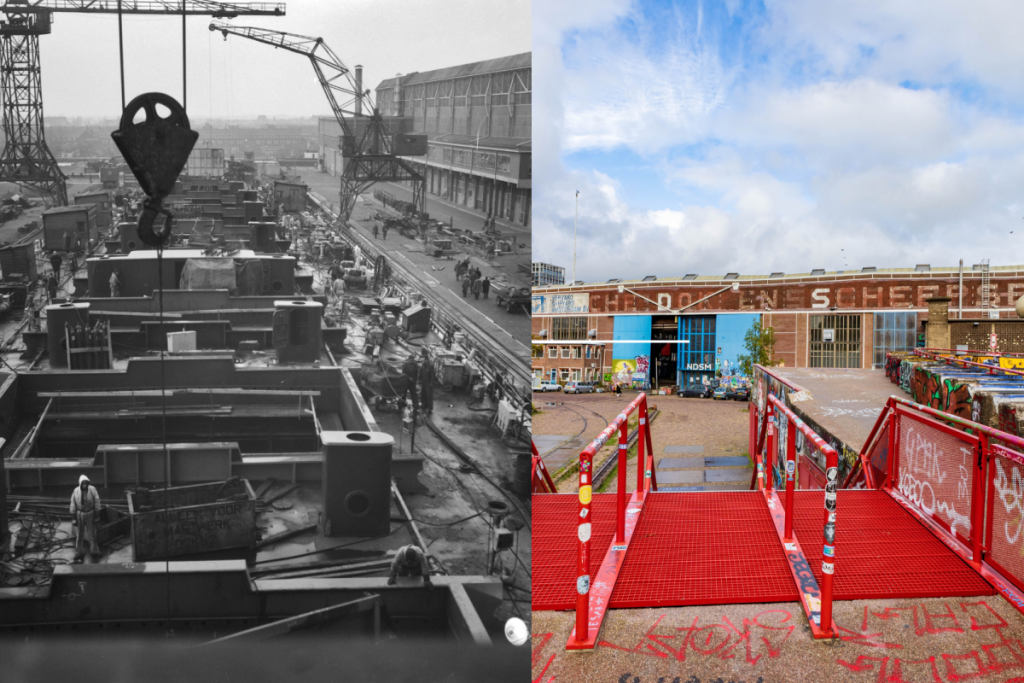

Anyone taking the ferry to the NDSM shipyard today steps into a world of towering street art, urban beaches, and creative hubs. But four decades ago, this part of Amsterdam-Noord looked very different.
When the shipyard went bankrupt in 1984, it left behind a quiet and deserted industrial area. How did dilapidated factory halls transform into the city’s most unique cultural district?
The Rise, the Lock Handicap, and the Fall in 1984
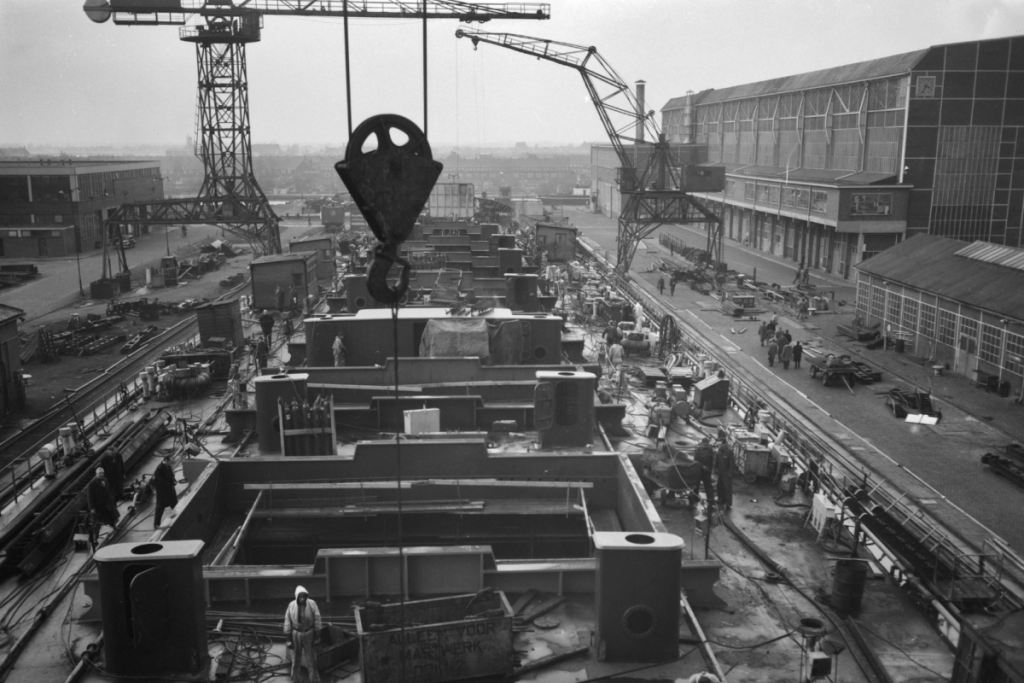
At its peak, the NDSM shipyard set the pace for all of Amsterdam-Noord. The stream of orders seemed inexhaustible, but the industrial giant had a physical limitation that would prove fatal in 1984.
The golden years of Amsterdam’s largest shipbuilder
In the 1950s and 1960s, the NDSM was running at full speed. Every day, thousands of workers took the ferry to the northern bank of the IJ. The sound of the hammers set the rhythm in Noord, where one mammoth tanker after another rolled off the slipway.
The Tuindorp Oostzaan neighborhood was built right behind the shipyard grounds specifically for all these shipyard families. Generations lived there side by side, dependent on the work on the water. The order books were overflowing, but behind that boom, a major problem was already taking shape.
The lock handicap that proved fatal to the shipyard
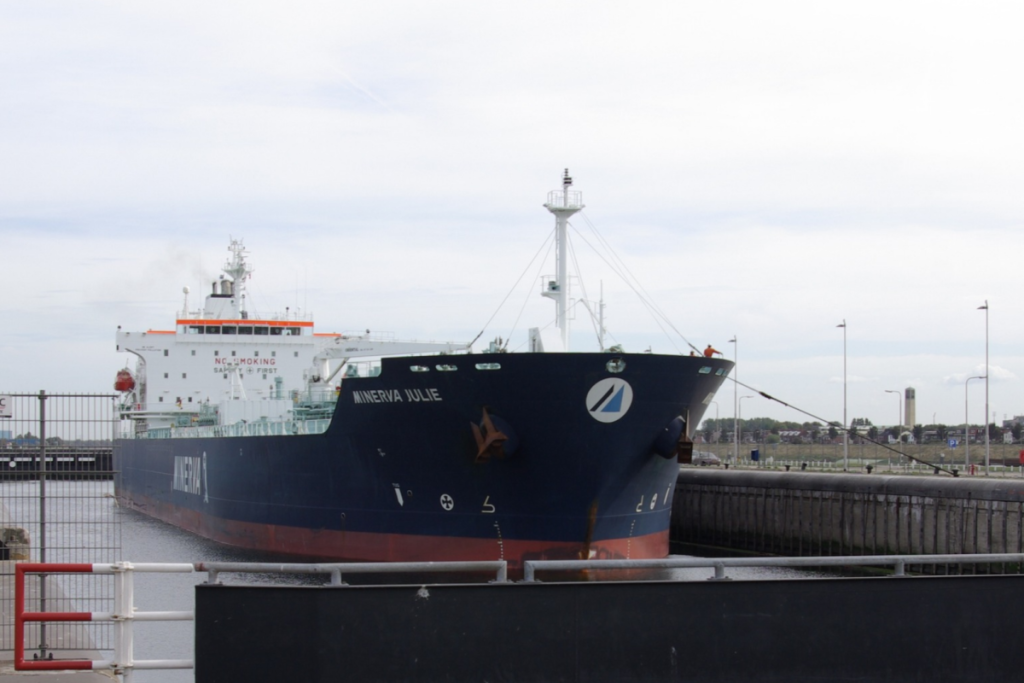
In the 1970s, the NDSM ran into a physical barrier. To reach the ocean, ships had to pass through the sea locks at IJmuiden. However, the new mammoth tankers had become so large that they simply no longer fit through the Noordersluis . The shipyard literally could no longer accommodate its most modern ships.
Combined with the oil crisis and fierce competition from Asia, this geographical constraint proved to be the final blow. In 1984 , the curtain fell for good, and the iconic shipbuilder went bankrupt. The engines ground to a halt, the halls emptied out, and the once-bustling quay turned into a silent steel monstrosity on the IJ.
From industrial ruin to the creative heart of Noord
From a squatters’ paradise to the famous “City of Art”
After the bankruptcy, the immense site turned into a desolate, raw space. Around the turn of the century, squatters, drug users, and cultural pioneers saw the potential in these neglected halls. They squatted on the grounds, joined forces, and claimed the vacant Shipbuilding Warehouse as a creative haven.
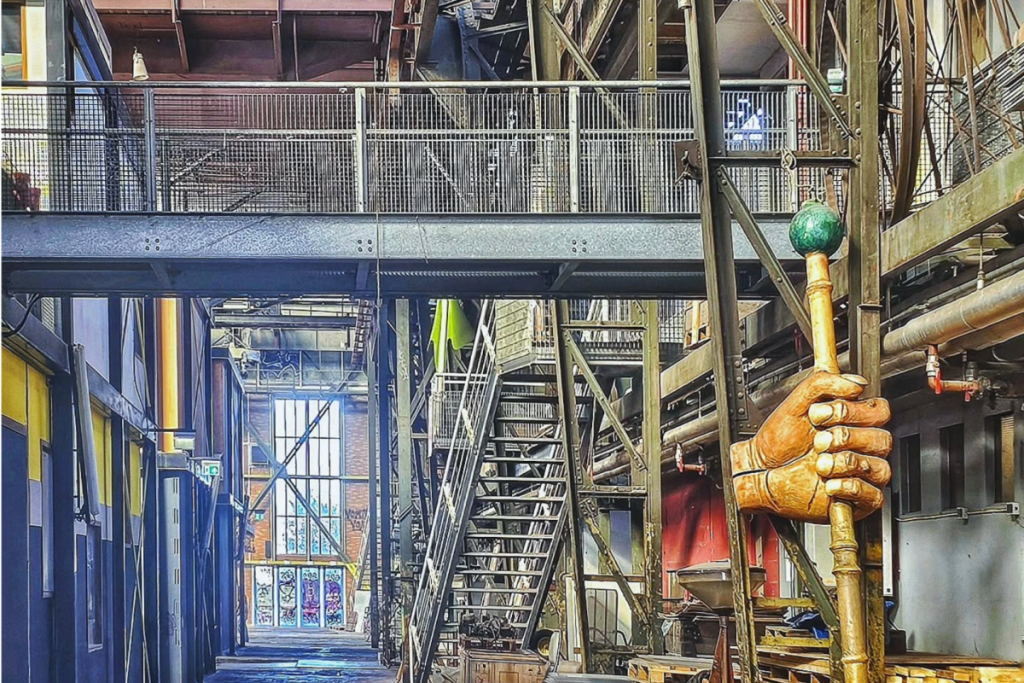
The Kinetisch Fabriek Foundation then transformed the industrial skeleton into the renowned Kunststad. Within the gigantic hall, an architectural “inner village” emerged, featuring more than eighty studios, workshops, and exhibition spaces. What began as an illegal occupation grew into the largest cultural incubator project in the Netherlands, but the shipyard’s transformation had only just begun.
From raw workshops to a world-famous cultural stronghold
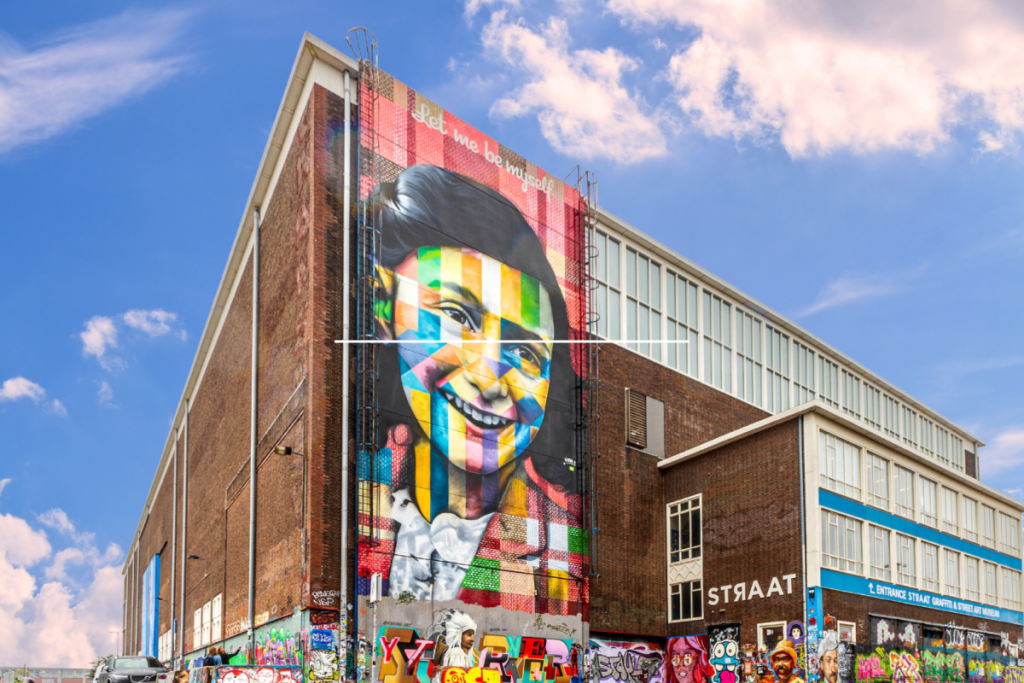
Today, the NDSM shipyard attracts visitors from all over the world. The monumental Lasloods now houses the STRAAT Museum, the world’s largest museum of street art and graffiti. Outside, on the clanging steel and concrete, major events such as the DGTL dance festival fill the calendar. What once began as a desolate shipyard has transformed into the cultural flagship of Amsterdam-Noord.
Its raw industrial soul remains its greatest draw. Hospitality pioneers such as Pllek and IJver set up shop in old shipping containers and warehouses with direct views of the IJ. Although the site is rapidly modernizing with new residential buildings and offices, every rusty crane and steel beam serves as a reminder of the shipbuilders who once set the tone here.