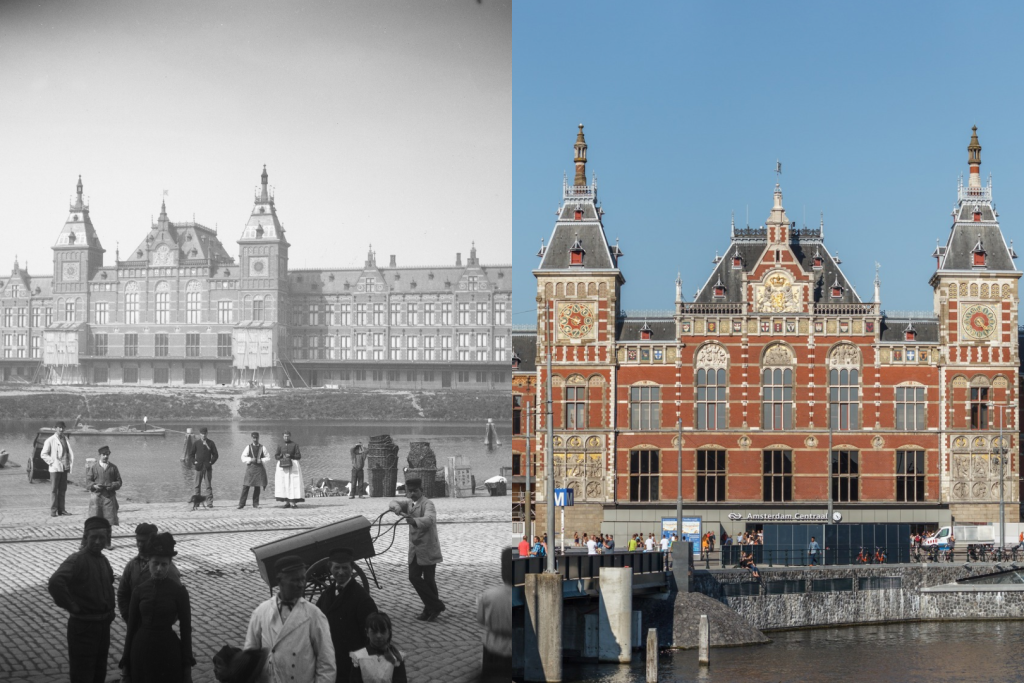

In the 1880s, the construction of Amsterdam Central Station was viewed by many as a recipe for disaster. Building a massive, monumental railway station on mud and quicksand was considered by critics to be an irresponsible pipe dream. Yet construction pressed on, and thousands of wooden piles were driven into the marshy banks of the IJ.
More than 130 years later, the skepticism of that time has given way to one of our country’s greatest engineering success stories. The station now welcomes crowds that would have been unthinkable in 1889. But the question many passersby don’t ask is how that 19th-century wooden foundation still keeps the iconic national monument standing, despite the constant vibrations from the tracks and the complex underground renovations.
A Station on the Water: The Daring Construction Project of 1889
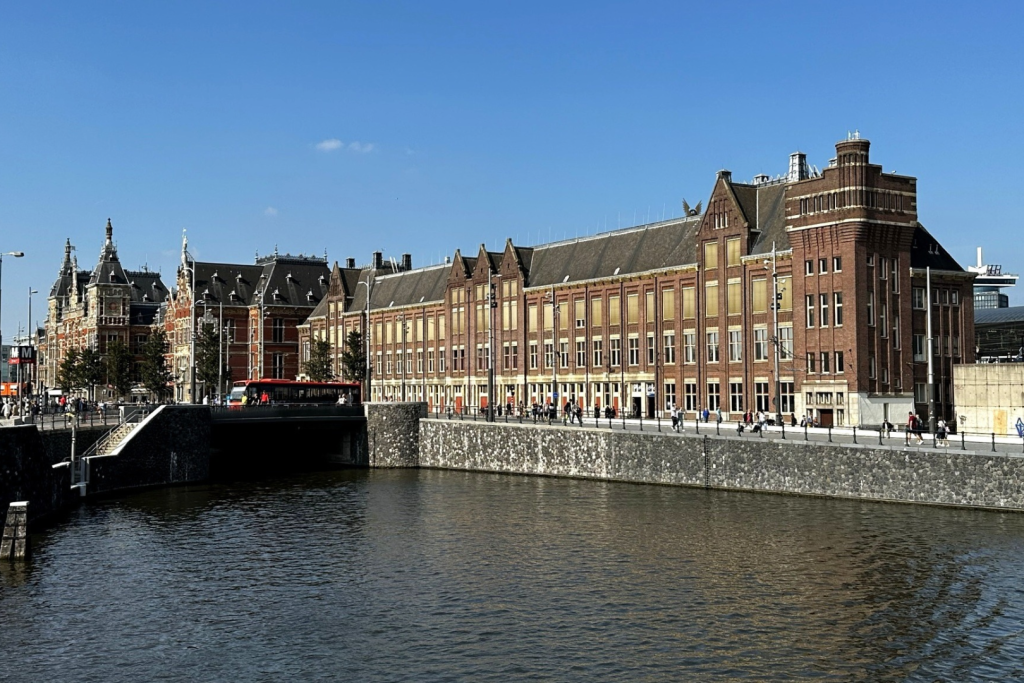
In the late nineteenth century, the rise of the steam train called for a central hub in Amsterdam. Architect Pierre Cuypers and engineer A.L. van Gendt designed a monumental railway palace, but ran into a massive problem: the marshy soil of the IJ. To be able to build there anyway, they had three artificial islands created by dredging up dune sand from IJmuiden.
The true craftsmanship lay below the waterline. Pile drivers used steam-powered pile-driving machines to drive exactly 8,687 logs of Norwegian pine through the soft clay, deep into the first layer of sand at a depth of twelve meters. On top of these pile heads, the builders mounted a heavy wooden grid of crossbeams that evenly distributed the immense pressure from the masonry.
130 Years of Transformation on the Same Foundation
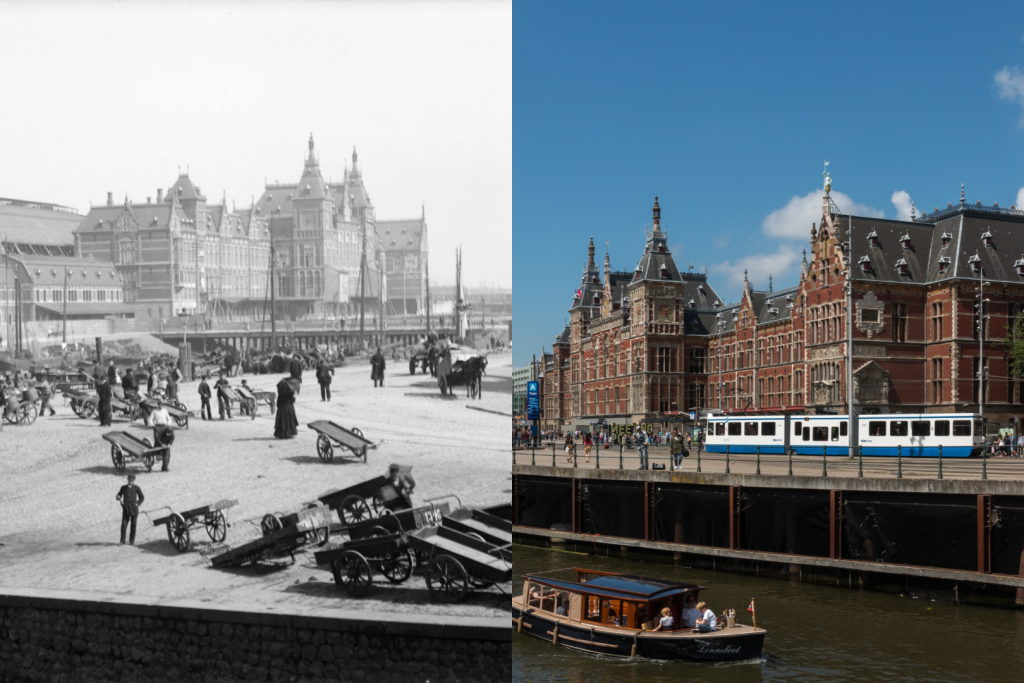
When the doors opened in 1889 , travelers entered a strictly segregated world. Pierre Cuypers’s neo-Gothic station exuded elitism and etiquette, with separate waiting rooms for different social classes and a royal wing. Wooden steam-powered railcars rolled quietly in under the steel canopy, while a modest stream of travelers strolled through the halls.
Today, that exact same floor space serves as Europe’s third-largest transportation hub. The historic waiting rooms house modern restaurants and cafes, and the tracks handle a continuous flow of high-speed trains and commuters. The 19th-century “cathedral of the classes” has transformed into a high-speed, state-of-the-art hub, supported by the exact same underground foundation.
No oxygen, no rot: the secret below the waterline

The fact that the Norwegian pine is still rock-hard after more than a century is thanks to a simple principle of physics. As long as the tops of the piles remain completely below the groundwater level, oxygen has no chance of reaching the wood. Without oxygen, fungi and bacteria cannot survive, ensuring that the wood remains perfectly preserved underwater.
During the major construction of the underground North/South Line, the 19th-century foundation faced its greatest test. Engineers monitored the water level and soil pressure millimeter by millimeter and installed a concrete structure to absorb the forces. In this way, the historic wooden foundation will continue to support the station rock-solidly well into the future.