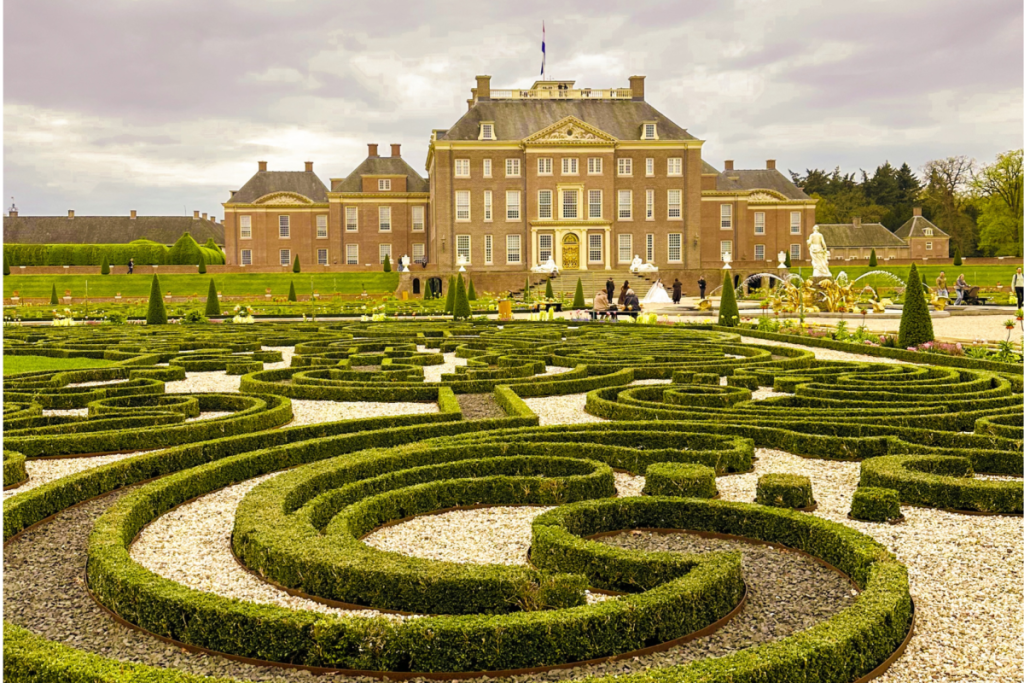

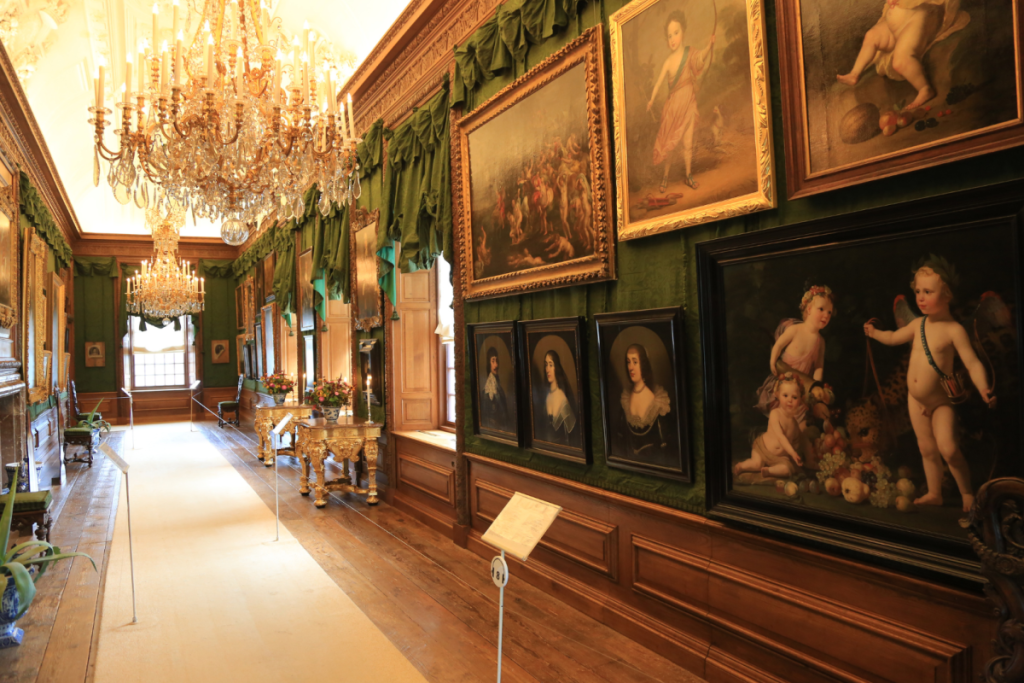
Napoleon and his troops left their mark in several places throughout the Netherlands —from the monumental Pyramid of Austerlitz, erected by his soldiers on the Utrechtse Heuvelrug, to the halls of Paleis Het Loo. But while Austerlitz was a military tribute, Paleis Het Loo was transformed by his brother, Louis Napoleon, into a personal royal estate.
Yet this “Versailles of the North” had a dark side filled with destruction and power struggles. Behind the strict symmetry lies a story of plundered halls, royal jealousy, and a French occupier who sought to erase the centuries-old heritage of the House of Orange.
The “Versailles of the North”
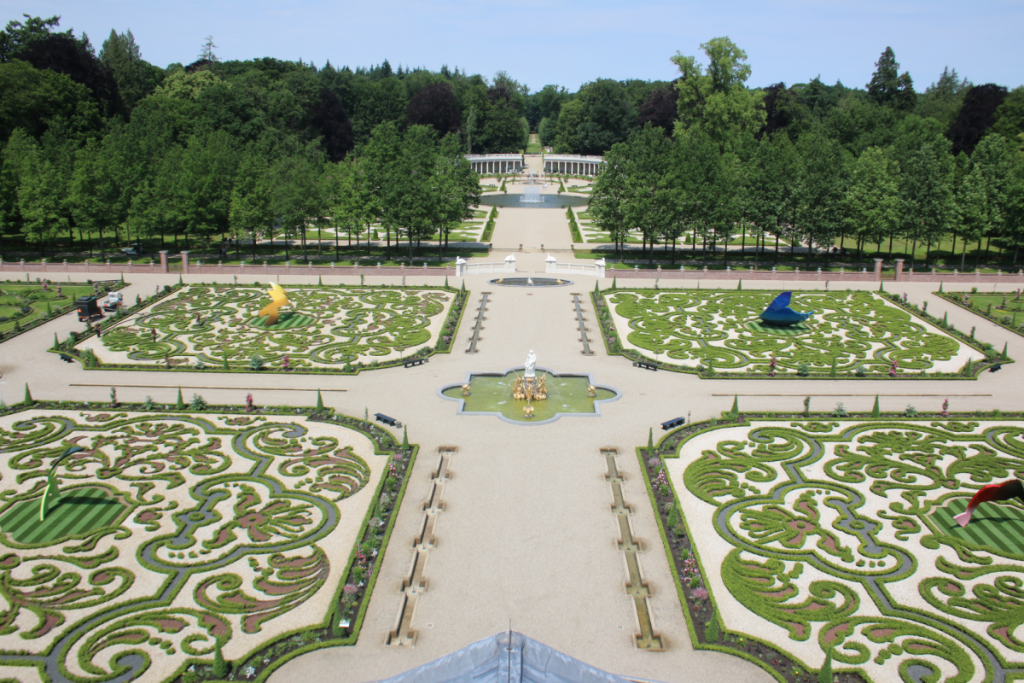
When Stadtholder William III had the palace built, he wanted to outdo the French Sun King, Louis XIV. The complex was meant to radiate the absolute power of the House of Orange and was soon dubbed the “Versailles of the North.” The competitive drive went to extremes: William III demanded that his engineers make the Baroque garden fountains spray meters higher than the world-famous water features in Paris.
That royal dominance, however, did not last when the French came to power and took the reins. The iconic palace was turned into a hospital, its furnishings were auctioned off, and the famous gardens disappeared beneath a layer of grass.
The French Occupation and the Traces of Napoleon
After the French invasion in 1795 , the royal pride and joy was transformed into a desolate field hospital. The House of Orange’s priceless furnishings were auctioned off, and countless works of art disappeared to Paris.
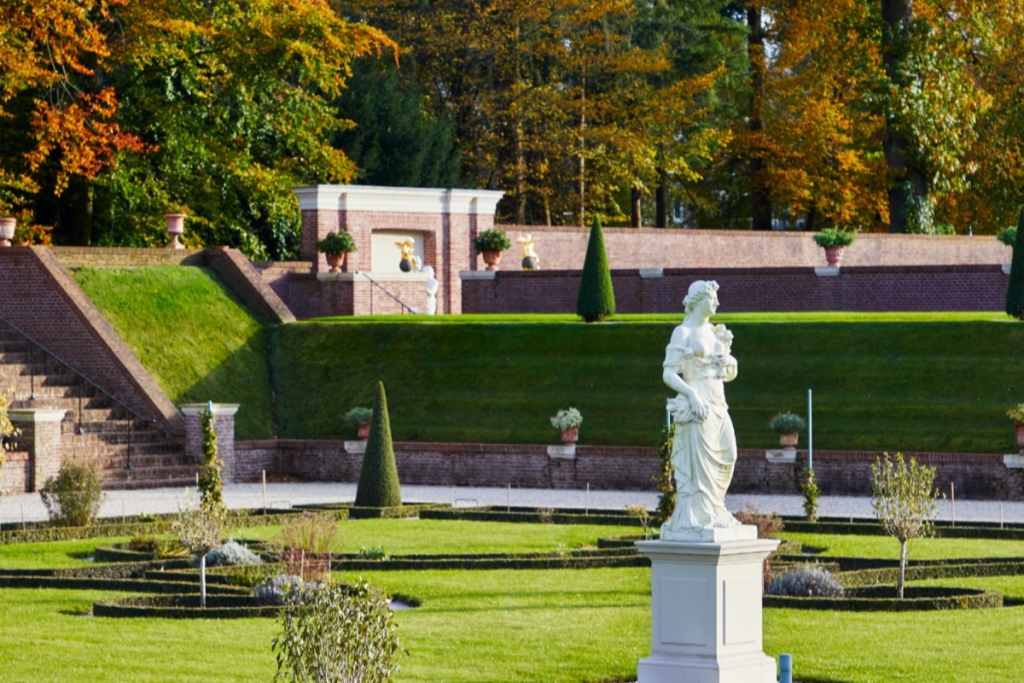
When Louis Napoleon ascended the throne in 1806, he claimed the estate as his summer residence. He ruthlessly referred to the neglected palace as “a garden without a palace.” The emperor’s brother had the halls boarded up and the world-famous Baroque gardens buried under a thick layer of grass—one of the most profound French imprints on Dutch soil.
Wilhelmina’s private train and the palace’s hidden secrets
After the French departed, the House of Orange reclaimed their damaged estate. King William III even went so far as to have his own railroad line built: the Loolijn literally ended at the palace grounds, so that the royal family could arrive in absolute luxury by private train.
For Queen Wilhelmina, the palace became her ultimate refuge. She lived there until her death in 1962. Decades later, the French lawn was dug up, and William III’s famous Baroque gardens were finally restored to their original 17th-century splendor.
Practical information:
- Address: Koninklijk Park 16, 7315 JA Apeldoorn
- Hours: Tuesday through Sunday from 10:00 a.m. to 5:00 p.m. (closed Mondays)
- Prices: €0 (children up to age 3) to €21 (adults)
- Public transportation: From Apeldoorn station, take bus 102 or 112 directly to the Paleis Het Loo stop