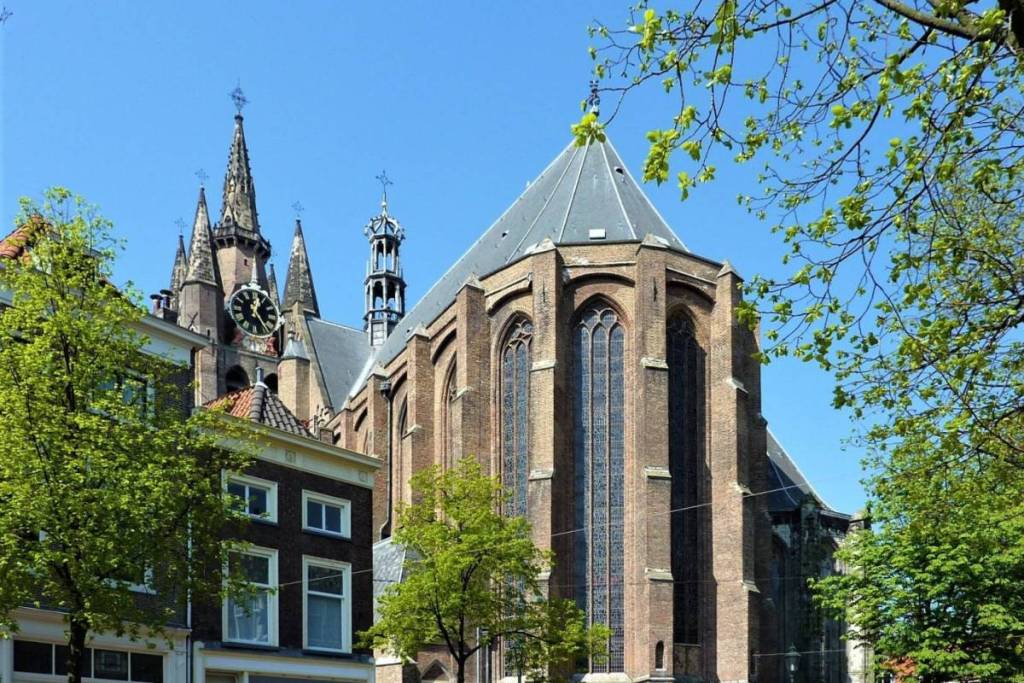

The Netherlands is full of beautiful churches, but the historic heart of Delft is home to one of the most striking. Close to the Prinsenhof and the Nieuwe Kerk, the gigantic tower of the Oude Kerk rises from among the canals, leaning so far out of plumb that it makes your head spin.
Behind the heavy wooden doors of the Oude Kerk lies an unprecedented collection of stories. Beneath the floorboards rest historical figures such as the explorer Antoni van Leeuwenhoek and Admiral Piet Hein, but it is above all the lost resting place of Johannes Vermeer (the master behind “Girl with a Pearl Earring”) that continues to fascinate visitors from all over the world.
The grave of Johannes Vermeer in the Oude Kerk

When Johannes Vermeer was laid to rest in the Oude Kerk on December 16, 1675, he left his family in debt. Nevertheless, recent archival research has revealed that the master painter received a funeral befitting his status: his coffin was carried by fourteen pallbearers while the church bells tolled solemnly. This lavish funeral was most likely financed by his wealthy mother-in-law, Maria Thins.
Vermeer was laid to rest in the existing family tomb in the north transept, where several of his children who had died young had already been buried. However, there was no money for an individual gravestone, so the exact location of his final resting place remained unknown for centuries.
Two memorials for one master
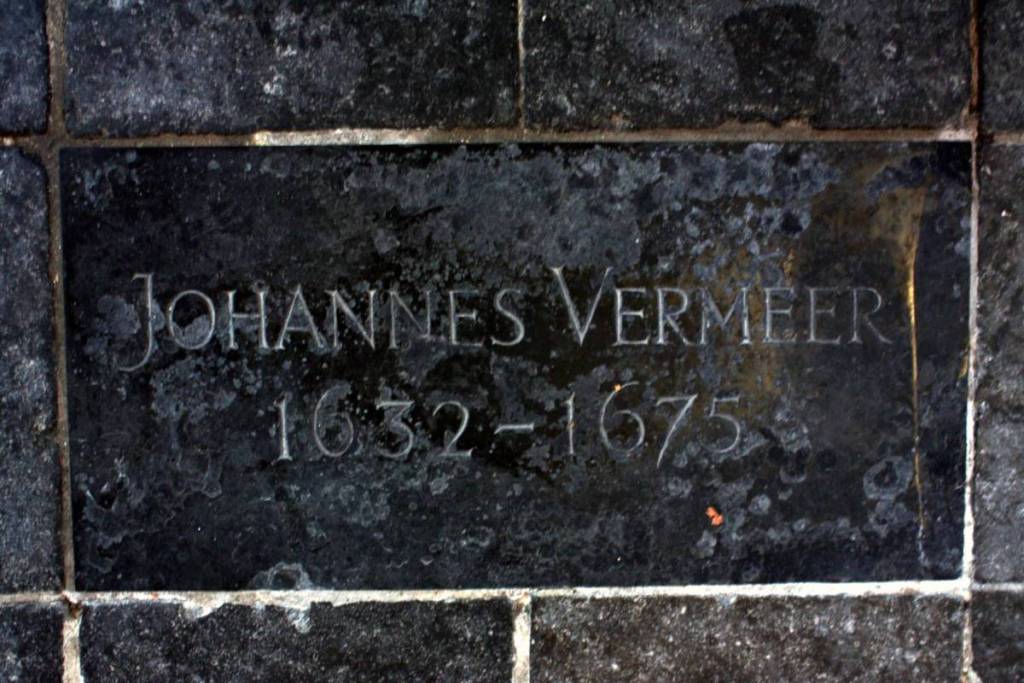
To accommodate the steady stream of visitors, two memorials have been placed in the church over the years:
- The austere stone from 1975: On the 300th anniversary of his death, a simple plaque was placed at the presumed site of the old family grave.
- The 2007 commemorative plaque: At the western entrance, there is a larger marble memorial stone for visitors.
“Scheve Jan” and the other tombs in the church
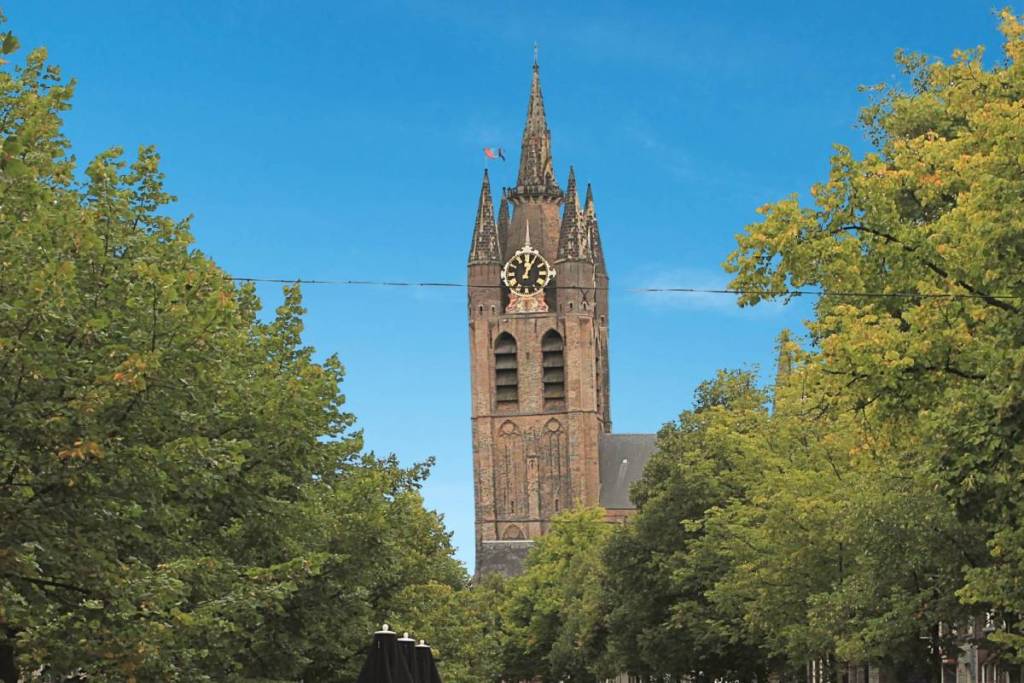
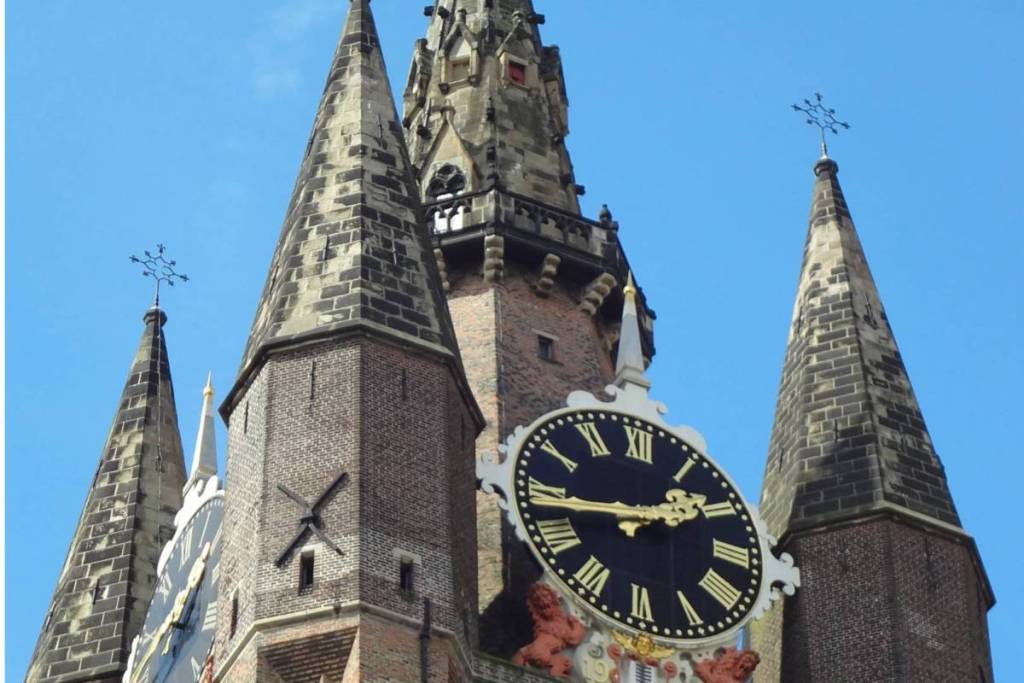
In addition to Vermeer’s grave, the Oude Kerk owes its fame to its striking architecture. The 75-meter-tall tower, popularly known as“Scheve Jan,” was built in 1325 on the site of a filled-in canal. Due to the soft clay soil, the foundation began to sink even during construction, causing the tower to stand 1.96 meters out of plumb today.
At the top of the leaning tower hangs the Trinitas Bell from 1570, also known as the Bourdon . Weighing 9,000 kilograms, it is one of the largest bells in the Netherlands. Due to the intense vibrations it causes, this bell is rung only on very rare occasions.
About 400 people are buried beneath the church floor. In addition to the master painter, the church is the final resting place of various well-known figures from Dutch history:
- Antoni van Leeuwenhoek: The pioneer of microbiology and inventor of the microscope was laid to rest in the church in 1723.
- Piet Hein: The 17th-century lieutenant admiral was given a marble mausoleum in the church’s choir.
- Maarten Tromp: The famous naval commander was laid to rest in 1653 beneath an imposing tomb featuring a detailed depiction of the naval battle in which he perished.
Visit the Oude Kerk in Delft
📍 Heilige Geestkerkhof 25, 2611 HP Delft
🚆 About a 10-minute walk from Delft Station (or 45 minutes by direct intercity train from Amsterdam Central)
🗓️ Monday through Saturday (opening hours vary by season)
⏳ 45–60 minutes
💵 Standard admission ticket (includes admission to the Nieuwe Kerk)