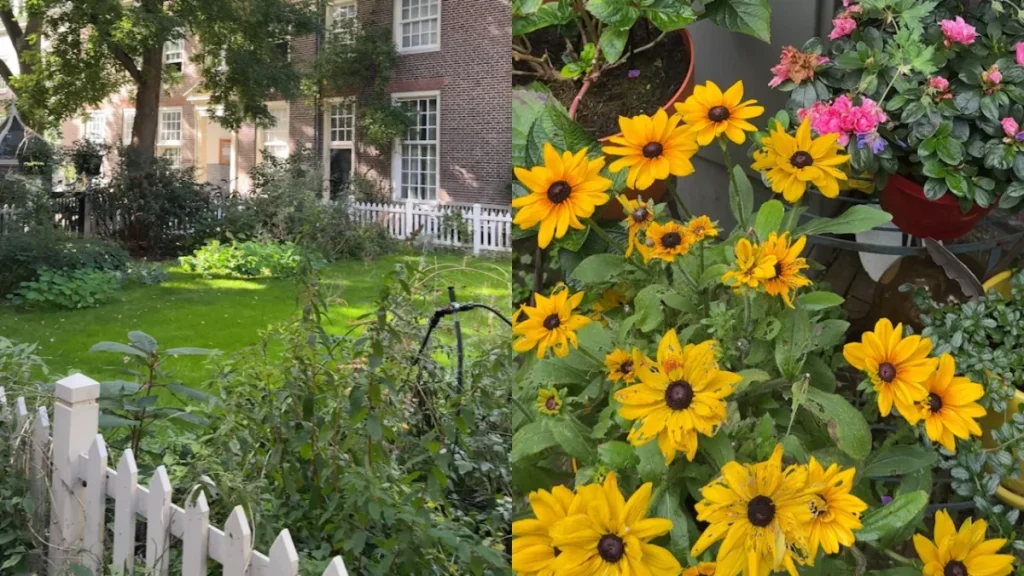

Hidden behind an unassuming passageway in the bustling Jordaan neighborhood lies one of Amsterdam’s most multifaceted places. Where the mighty Carthusian monastery was built in 1394 and the grounds served as a mass grave for thousands of plague victims in 1602 , a sheltered courtyard was built in 1650 : the Huiszittenweduwenhof.
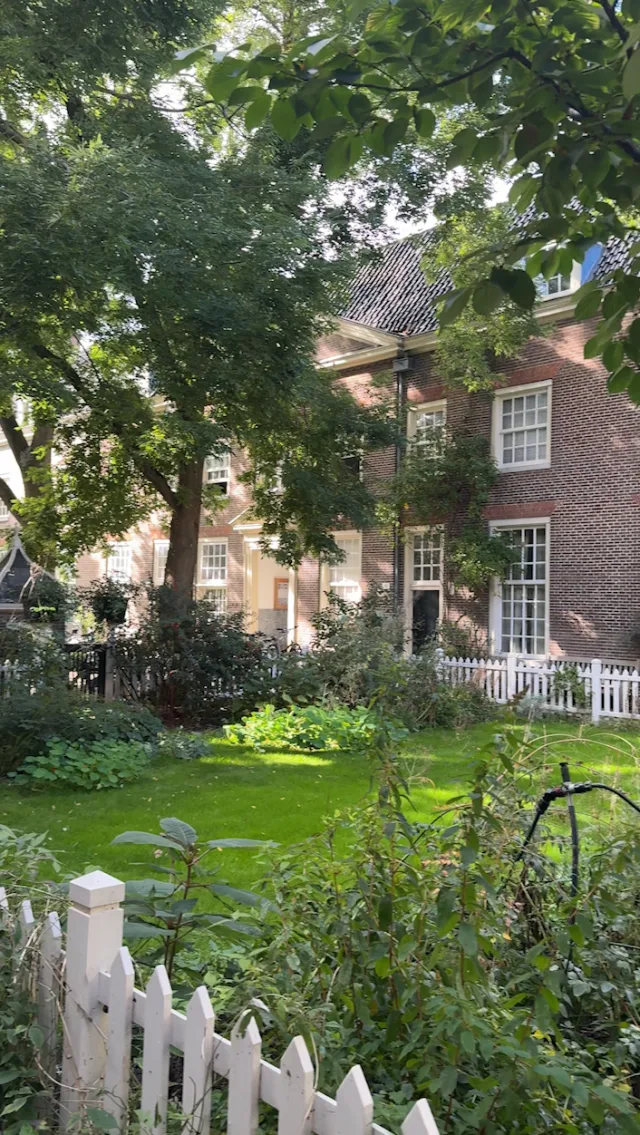
This impressive complex on Karthuizersplantsoen was built by the city’s poverty relief agency to provide a safe and free haven for impoverished widows and single women. Today, the enclosed courtyard still exudes a striking, almost serene tranquility, far removed from the hustle and bustle of modern city life.
An ingenious complex for more than a hundred widows
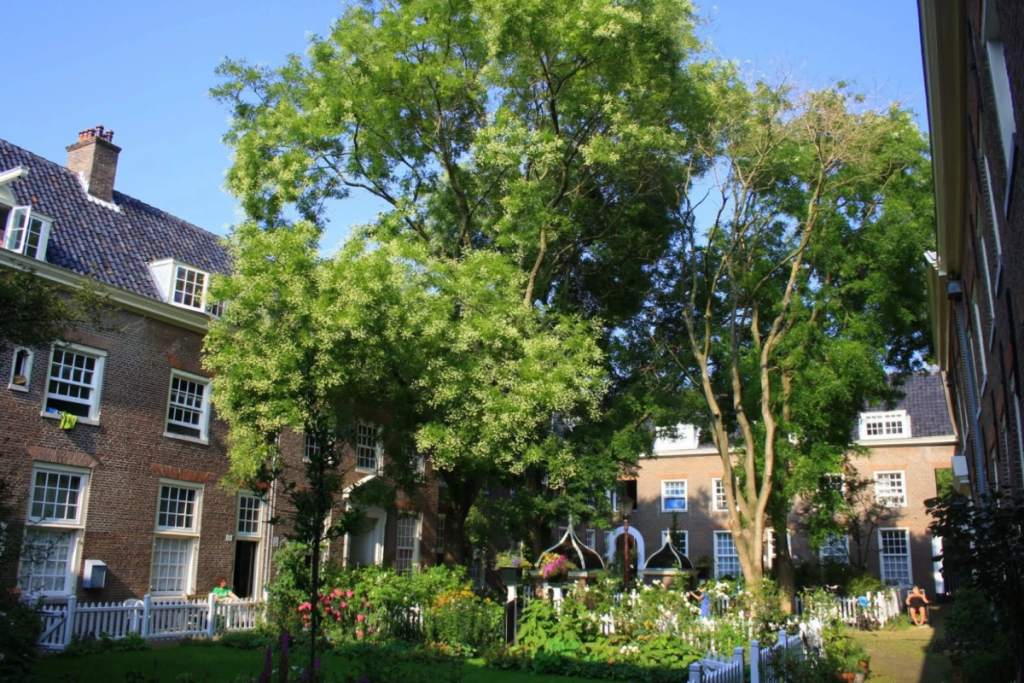
In 1650 , City Architect Daniël Stalpaert designed a sleek and functional complex centered around a spacious central courtyard. With over a hundred simple one-room dwellings, the courtyard provided maximum shelter for Amsterdam’s poorest single women.
Eye-catchers in the courtyard are the monumental sandstone water pumps, decorated with a copper fish and a mascaron. Although the tiny dwellings have since been combined into approximately 65 more spacious homes, the brick facades still exude seventeenth-century craftsmanship.
A turbulent history dating back to 1394
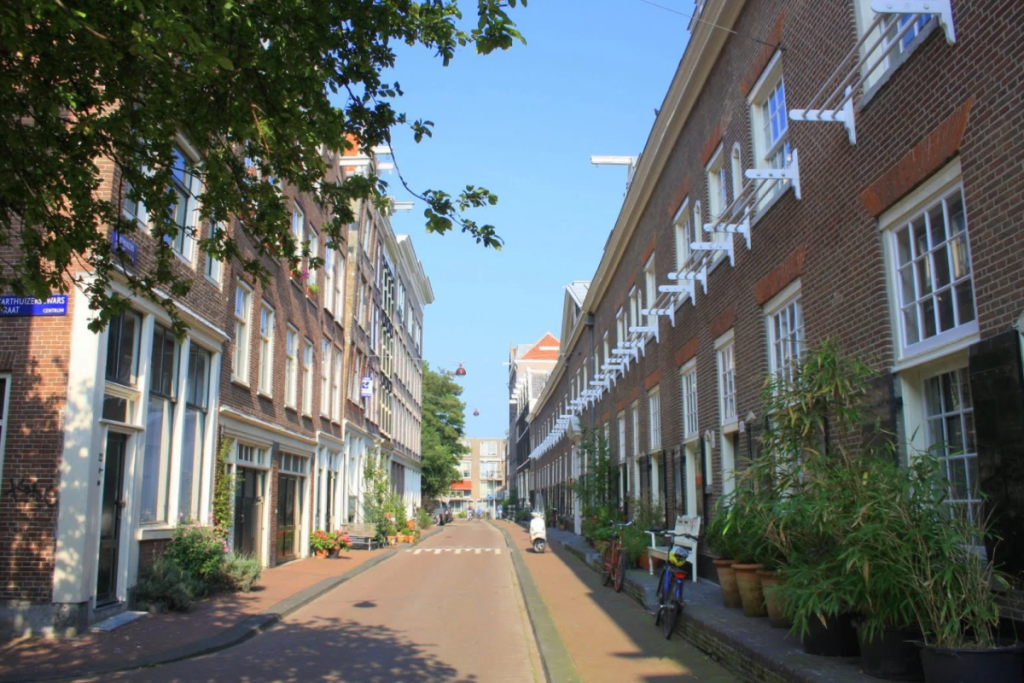
Before the courtyard was built, the site had a turbulent history. In 1394, monks founded the Carthusian monastery of St. Andrew at Zaliger Haven here, a large complex outside the city walls of that time. After the Reformation, the monastery was largely demolished, but the land remained in the possession of the city council.
During the devastating plague epidemic of 1602, the site was given a grim new purpose as an emergency cemetery. Thousands of Amsterdammers found their final resting place here in mass graves. It wasn’t until the mid-seventeenth century that the Huiszittenmeesters decided to transform this burdened ground into a safe shelter for impoverished single women.