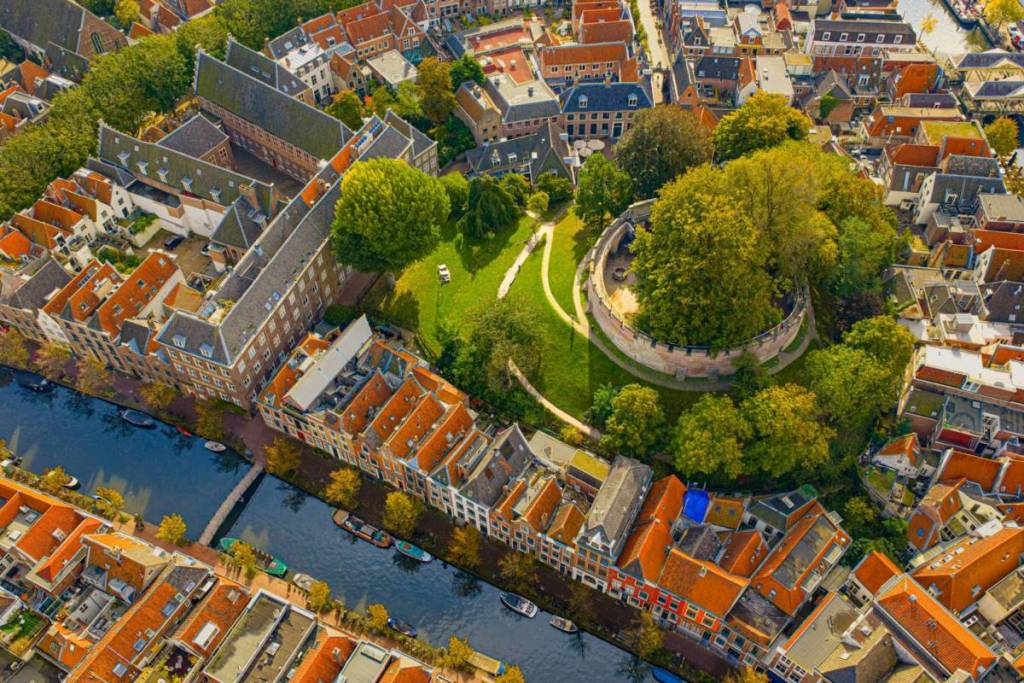

The Netherlands is full of historic castles, deep canals, and centuries-old defensive lines. But right in the heart of Leiden stands a truly unique example. Behind the facades of the city center rises a thousand-year-old man-made hill at the point where two branches of the Rhine converge. At the top, you’ll find the oldest motte-and-bailey castle in our country, where residents once took refuge from devastating attacks.
The secret of the handmade clay mound
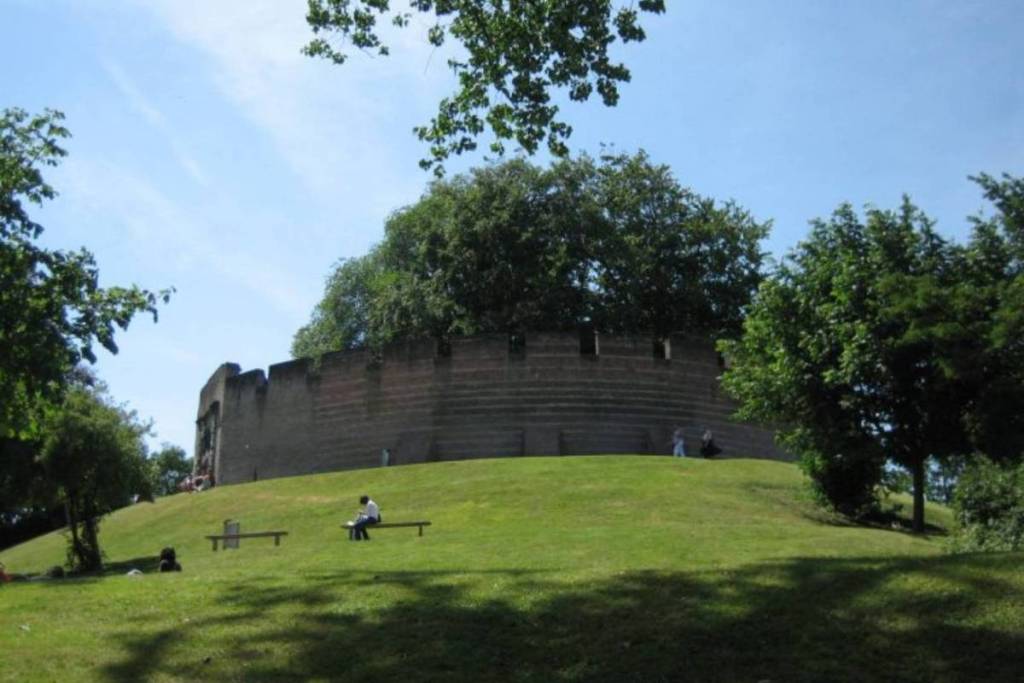
In the ninth and tenth centuries, the site of Leiden’s current city center was still marshy. Right at the strategic point where the Rhine, Mare, and Vliet converge, medieval people toiled to build a gigantic artificial hill. Using countless layers of clay and soil, they raised the terrain in phases to as much as twelve meters above the surrounding area.
The complex began modestly as the “Leitheriburch”: a refuge enclosed by wooden stakes where local farmers and their livestock sought shelter in times of danger. Around the year 1000, the first wooden structure was erected here. It wasn’t until the twelfth century, under Count Dirk VI, that the wood gave way to a heavy tuff ring wall.
The medieval drama of 1203
In the spring of 1203 , the castle became the scene of a devastating power struggle. When Ada of Holland, just fifteen years old, succeeded her late father as countess, her power-hungry uncle Willem refused to accept that decision. The young countess desperately sought protection behind the thick walls of Leiden’s fortress.
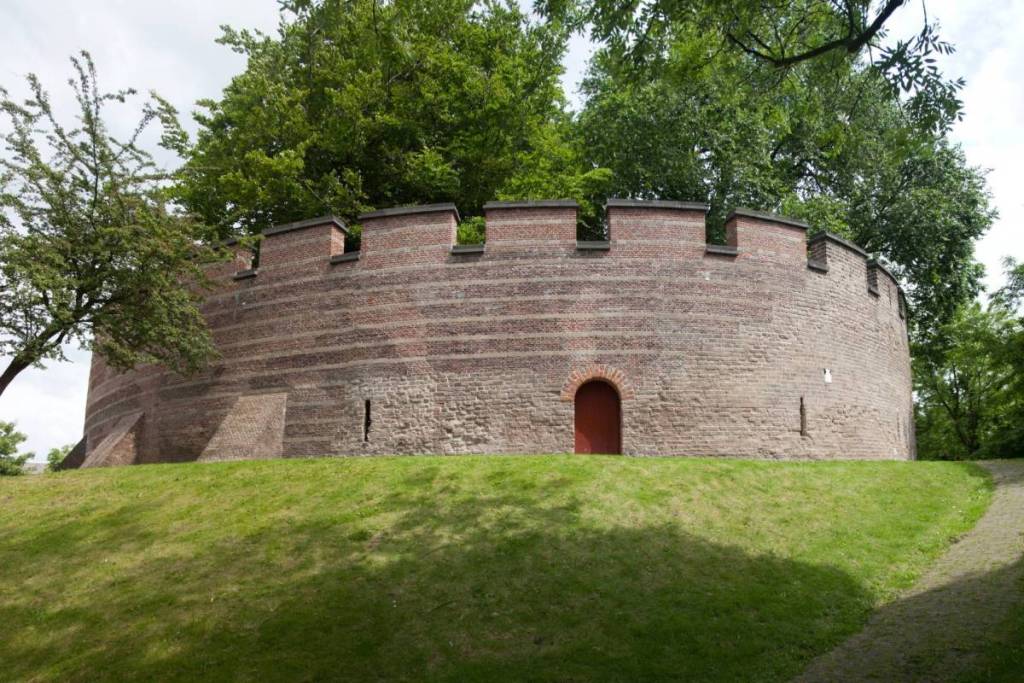
During the bloody Loonse War, her uncle’s troops stormed the structure. The castle was captured, and Ada was taken prisoner to Texel. The fighting caused widespread destruction. Using giant red bricks—known as “kloostermoppen”—the residents repaired the battered wall. Around 1275 , Count Floris V had the ring wall rebuilt into the iconic stone circle that still stands there today.
Bizarre Taxes and Rabbits for Professors
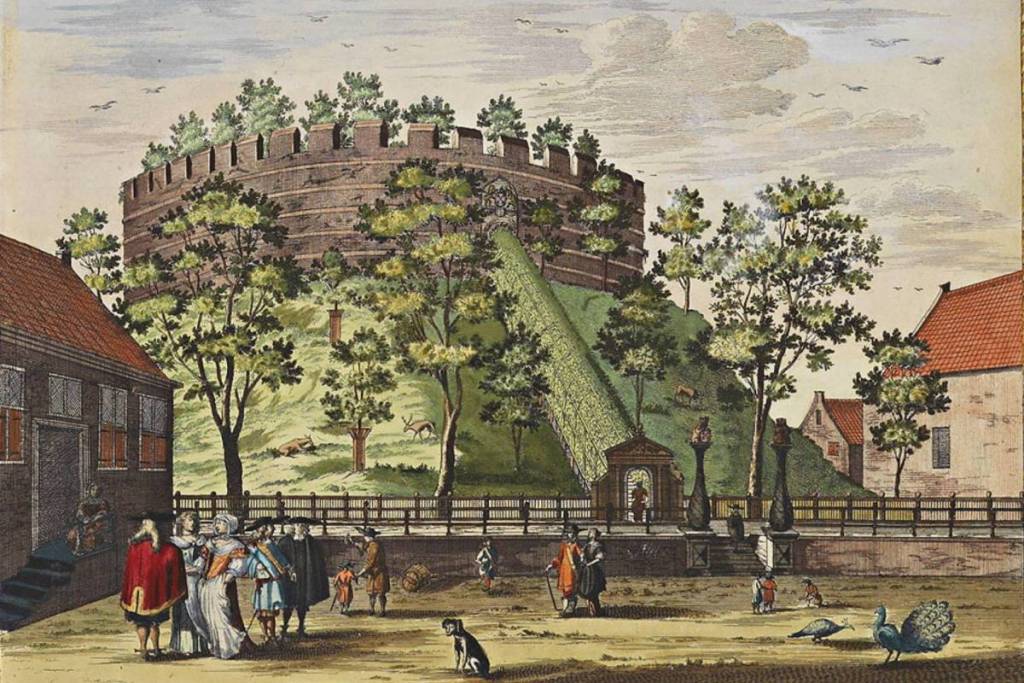
In the seventeenth century, the motte-and-bailey castle definitively lost its military function. Because the viscount was deeply in debt, the city of Leiden purchased the structure in 1651 for 70,000 guilders. The fortress was transformed into an urban oasis featuring a maze, fruit trees, and a deer park.
That green space, however, was subject to a few extremely peculiar rules. The tenant of the deer park was required to deliver one deer annually to the city council, plus two pairs of rabbits for Leiden’s professors. Just as bizarre was a tax imposed on immediate neighbors. For four centuries, they paid three guilders every five years, purely because they had secretly dug a well in the artificial hill in 1653.
Free panoramic view of Leiden
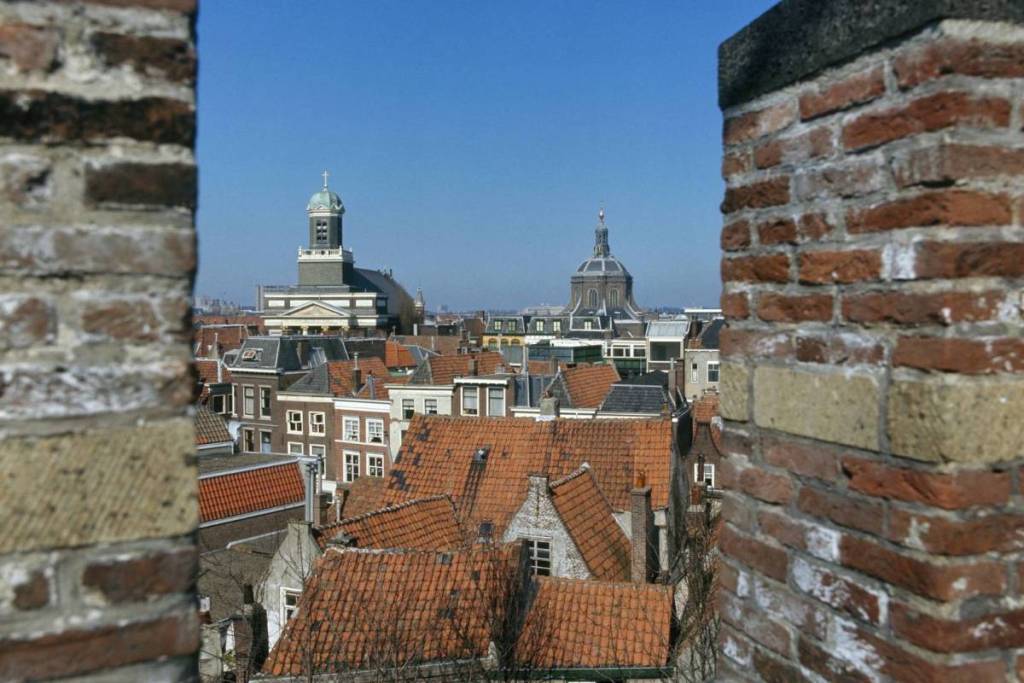
Today, you can walk up the hill for free through the elegant wrought-iron gate dating from 1653. Once at the top, you’ll find yourself in the middle of the 35-meter-wide ring fortress, where the centuries-old rampart is still intact.
Peek through the narrow arrowslits in the walls or climb to the edge of the parapet. From here, you can survey the rooftops of the historic city center and see exactly where the river branches converge. It’s the perfect starting point for a day in Leiden.