Language is a beautiful thing, but it’s not always possible to express yourself with just one word. Fortunately, idioms fill that gap —a wonderful mishmash of words that mean something completely different when combined. Anyone learning English will tell you that idioms are strange or hilarious, but in every language there are plenty of these little gems to ponder and laugh at .
We’re not even kidding.
1. ‘I’ll show you where lobsters spend the winter’

Russian: ‘Где раки зимуют’
Apparently, fishing for crayfish under the ice used to be a punishment in Russia, so this expression is used to express anger and as a warning.
2. To be made of chili peppers.

Spanish: Estar hecho un ají.
If you’re made of chili peppers, you’re furious—short and to the point. We love it.
3. ‘You are my liver’

Persian: ‘Jeegaré man-ee’
In Iran, calling someone your liver is the same as saying they have your heart. In fact, you love them with every fiber of your being. How sweet!
4. ‘May the cat eat you and the devil eat the cat’
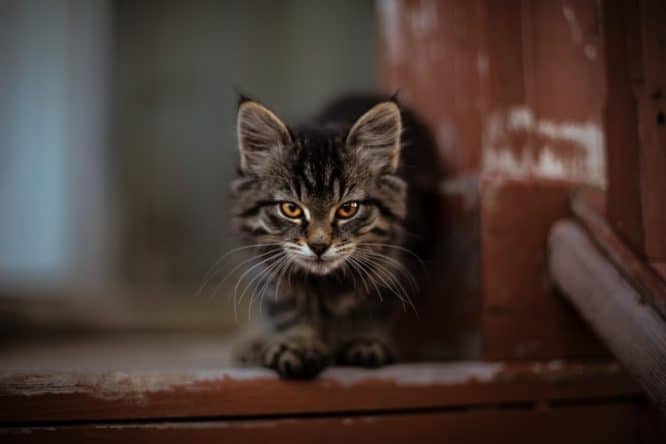
Gaelic (Irish): Go n-ithe an cat thú, is go n-ithe an diabhal an cat
If someone says this to you, in English or Irish, you know they’re angry. They’re basically saying you should be eaten, then eaten again, and ultimately end up in hell, in a cat’s stomach. Sounds fun.
5. ‘Pretend it’s raining’

Swedish: ‘Låtsas som att det regnar’
If someone in Sweden tells you to pretend it’s raining, they mean you should pretend you know nothing about the current situation. Let’s be honest, making small talk about the weather is the best way to break an awkward silence anyway.
6. ‘There’s no cow on the ice’

Danish: Det er ingen ko på isen
Just imagine how stressful it would be to rescue a 1,000-pound cow from a freezing fjord. So if your cows are safely out on land munching on frozen grass, everything is hunky-dory.
7. ‘Like a single hair from nine oxen’

Mandarin Chinese: 九牛一毛 (jiǔ niú yì máo)
Here’s another expression involving cattle, but this time it comes from China. Oxen are huge, and just look how hairy they are! So one hair from nine enormous oxen must be very insignificant. Hence the expression.
8. To be in the olive oil

Portuguese: Estar com os azeites.
If you’re Portuguese and you’re “with the olive oil,” you’re in a bad mood.
9. Where the fox and the rabbit say good night to each other.

German: Wo sich Fuchs und Hase gute Nacht sagen.
The English equivalent of this saying is “in the middle of nowhere,” but expressed in a more poetic way.
10. ‘Like acorns comparing their heights’

Japanese: どんぐりの背比べ (どんぐりの せいくらべ)
It’s clear that acorns don’t differ all that much from one another. And unless you’re a squirrel, they aren’t exactly impressive either. So if you see a group of boring people comparing their unremarkable hobbies, you could say, “They’re just like acorns comparing their heights.”
11. Keeping a hedgehog in your pocket

Welsh: Cadw draenog yn dy boced
Fortunately, this expression isn’t meant to be taken literally. If every stingy miser in all of Wales had a hedgehog in their pocket, that would sound rather uncomfortable. After all, the Welsh word for hedgehog (draenog) literally means “prickly” or “with quills.”
12. “The dancer dies, but her waist still moves”

Arabic: تموت الراقصة ووسطها بيلعب
You could translate this saying as “old habits die hard,” and the Arabic version also has a beautifully poetic quality.
13. ‘He has a lot of butter on his head’

Slovenian: Ima veliko masla na glavi
Slovenians use this saying to indicate that someone is guilty. Why does butter come into it? We don’t know exactly.
14. ‘Roasted pigeons don’t fly into your mouth’

Czech: Pečení holubi nelítají do huby
It’s true, roasted pigeons never fly into your mouth. But this expression is used to tell people that they have to work hard to achieve something in life.
15. ‘He has fishing hooks in his pockets’

Italian: Ha ami da pesca in tasca.
If you had fishing hooks in your pocket, you wouldn’t want to rummage around in there looking for money. This saying is meant for stingy people, for whom spending money is very painful.