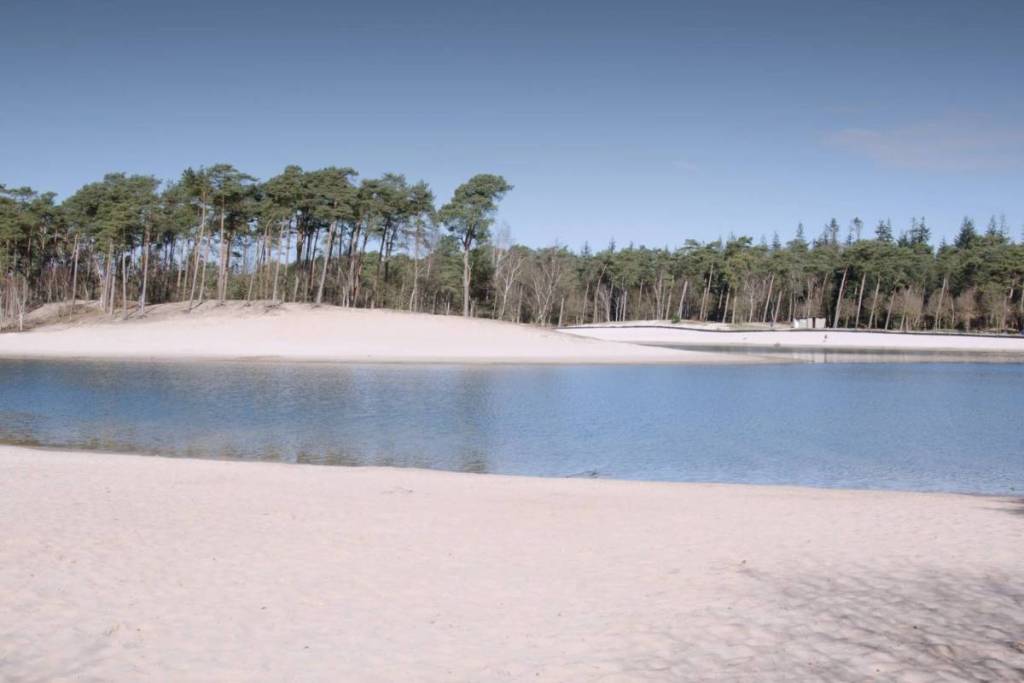

When people think of the Utrechtse Heuvelrug, they usually picture dense pine forests. But hidden deep within the greenery lies Henschotermeer: an idyllic forest lake with snow-white sand, crystal-clear water, and an island accessible via wooden footbridges. It feels like a tropical paradise. Yet this beloved spot owes its existence to a threatening sand drift and the excavation work for the A12 highway and the Grebbelinie.
A Caribbean dream in the woods: wooden footbridges and crystal-clear water
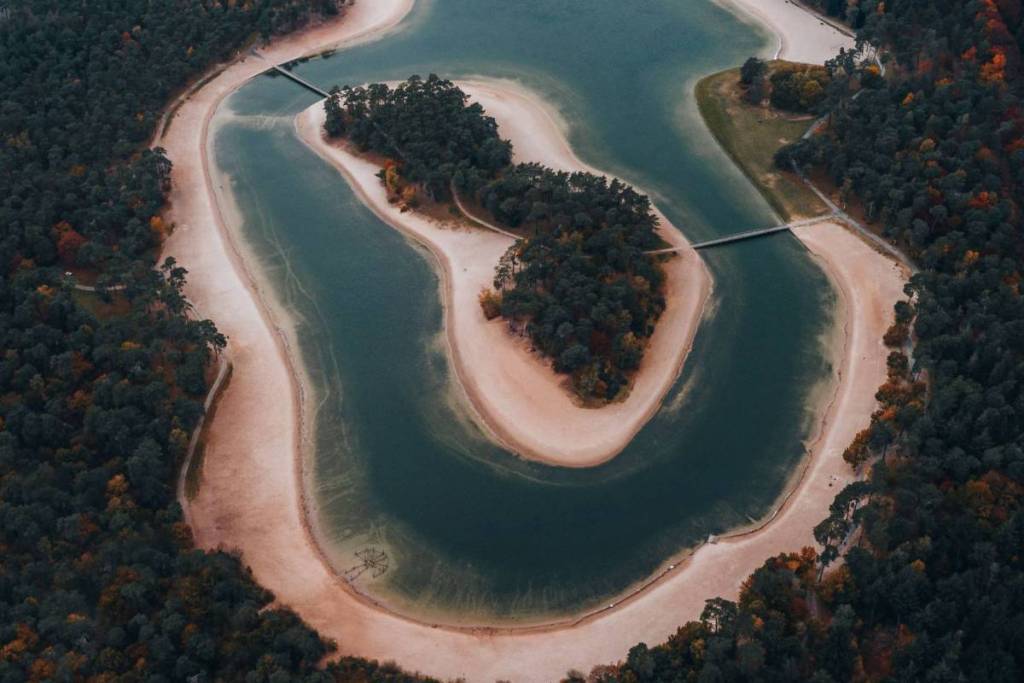
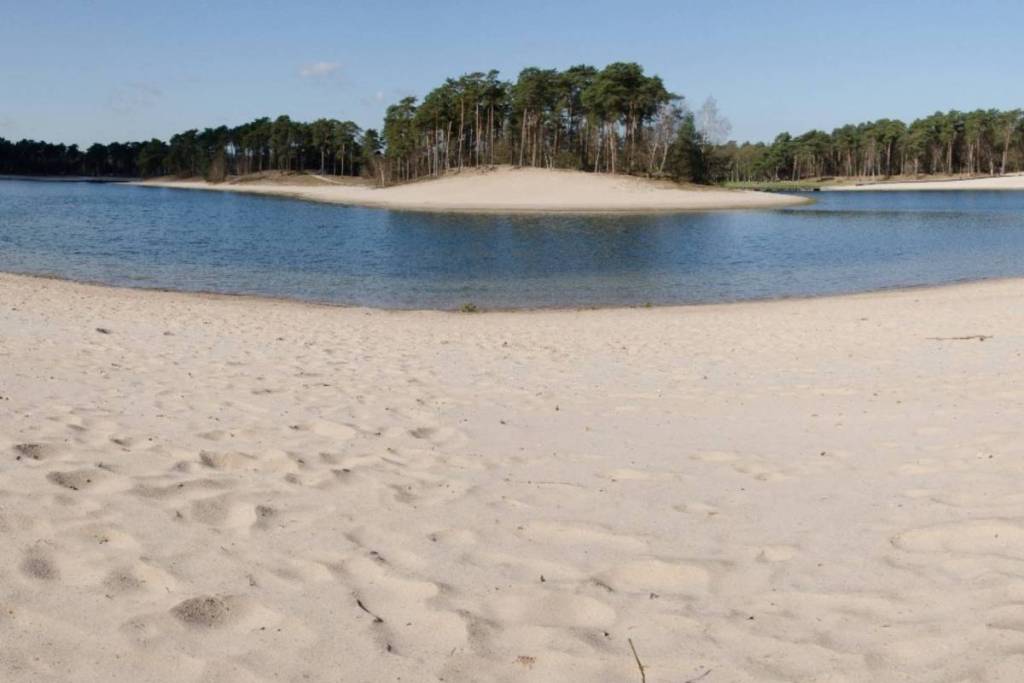
Anyone visiting Henschotermeer for the first time might momentarily doubt where they are. Nestled in the middle of the dense coniferous forests of the Utrechtse Heuvelrug lies a tropical-looking oasis. The crystal-clear swimming water is surrounded by a vast, snow-white sandy beach and lush greenery.
The absolute centerpiece is a picturesque island, accessible from the beach via two distinctive wooden footbridges. A paved walking trail nearly 2,500 meters long winds around the lake—perfect for a leisurely stroll or a jog. With wooden playground equipment and authentic beach restrooms, this spot combines the tranquility of nature with modern comfort.
From Devastating Sandstorms to a Byproduct of the A12 and Grebbelinie
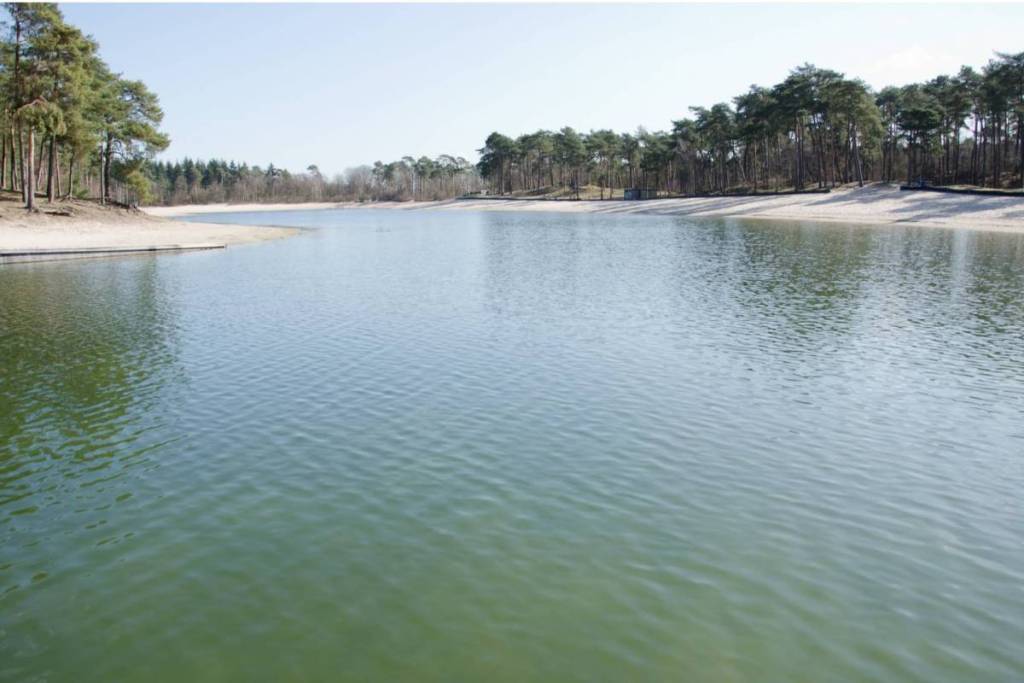
Today’s fairytale-like setting conceals a turbulent history. Until 1895 , the area was a wild sand drift that threatened to cover the surrounding meadows and roads. To curb the drifting sand, the plain was covered with sod and heather, among which dense forests were planted.
The current lake was only created in the 1930s. To construct the A12 highway and the Grebbelinie military defense line, sand was excavated here on a large scale. The resulting deep crater wasn’t further deepened to become an official swimming lake until 1972. Virtually no one on the beach realizes that this idyllic oasis owes its existence to highway plans and wartime defense efforts.
Castle Routes, Imperial History, and the Gelderse Vallei
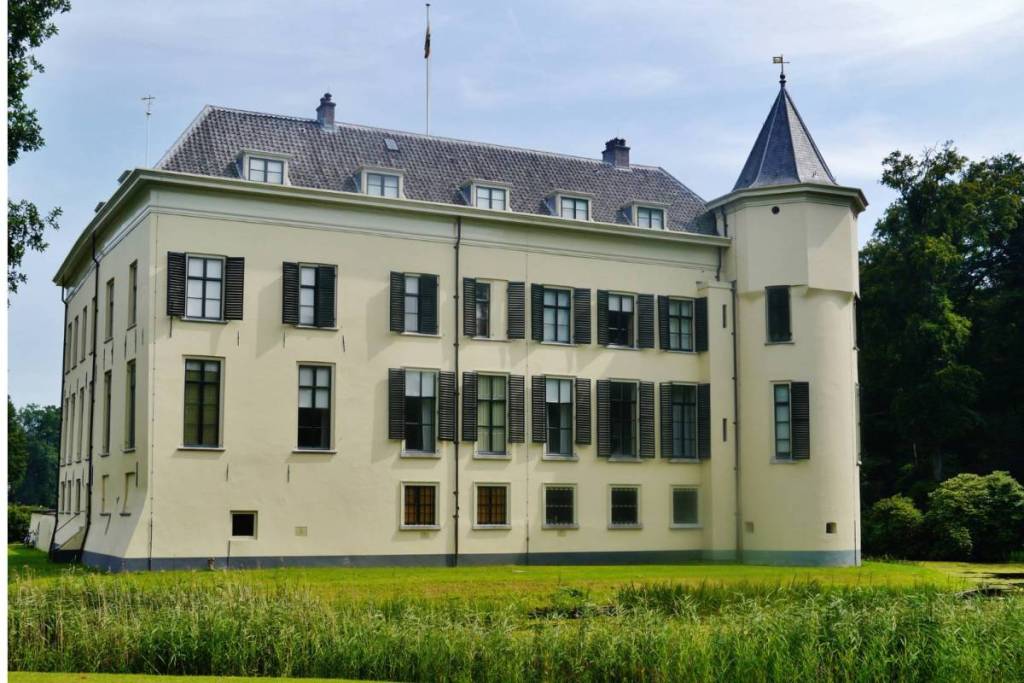
A visit to Henschotermeer can be perfectly combined with exploring the region’s rich history. The Utrechtse Heuvelrug and the Gelderse Vallei are home to some of the most beautiful castles in our country. For example, nearby lies Huis Doorn, the historic estate where the fugitive German Emperor Wilhelm II lived in exile after World War I.
Amerongen Castle and Renswoude Castle —with royal ponds inspired by Versailles—are also just around the corner. From places like the Ruwinkel Estate, you can cycle through dense forests and historic estates. This way, a relaxing day by the water effortlessly turns into a cultural journey of discovery.
Practical Visitor Information
- Location: Woudenberg, Utrechtse Heuvelrug (Gelderse Vallei)
- Admission: €3.70 per person
- Hours: Open daily from 8:30 a.m. until sunset