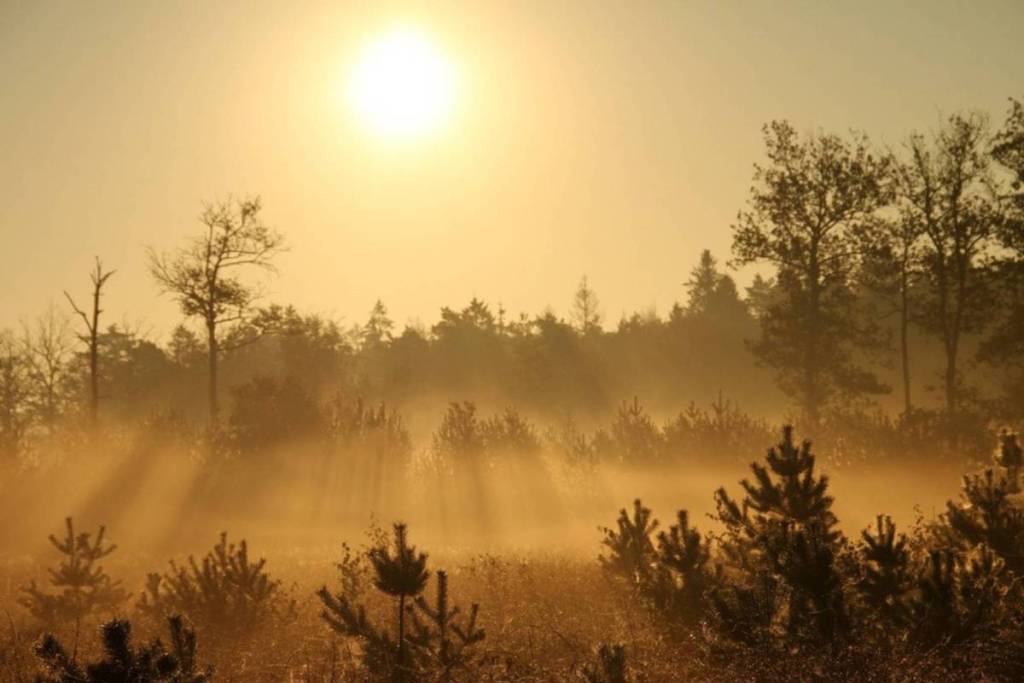

From the azure-blue ‘t Nije Hemelriek and the deep-blue Blauwe Meer to prehistoric hunebeds: Drenthe offers an impressive variety of natural landscapes. Hidden in the heart of this province lies a truly extraordinary landscape.
A 2-hour drive from Amsterdam takes you to Dwingelderveld National Park: Western Europe’s largest wet heathland, stretching across 3,700 hectares of rugged wilderness.
From floating above the marsh on a 5.5-km-long boardwalk to spotting the three snake species found only in the Netherlands: this is a unique wilderness experience right here at home.
The Plankenpad: 5.5 km across the marsh
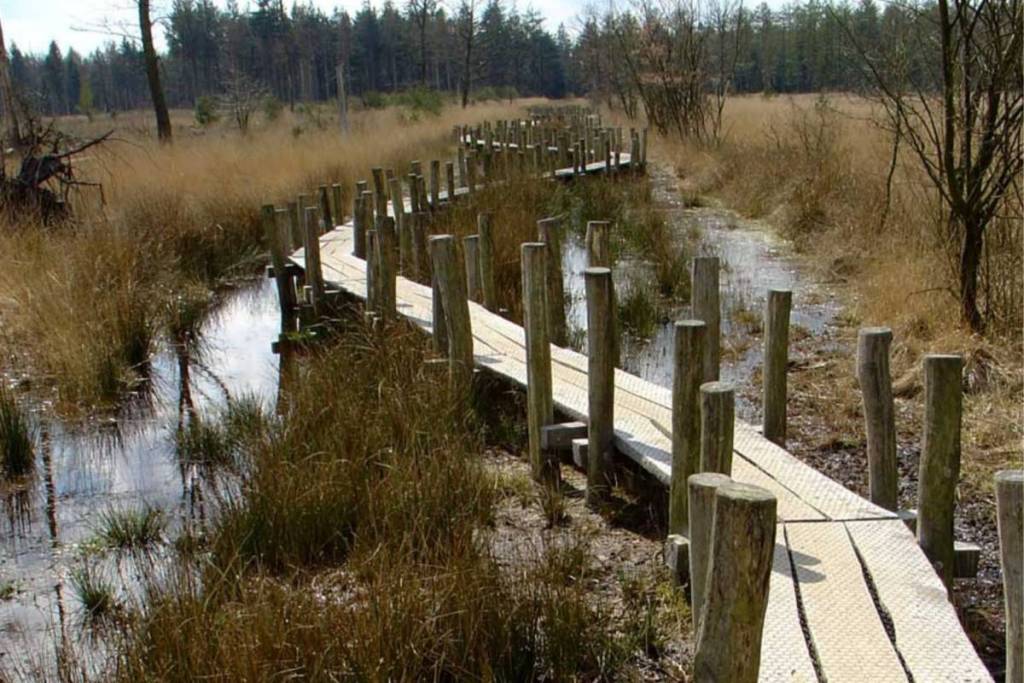
The wooden boardwalk through the Dwingelderveld takes you straight through the marshy peat landscape. The 5.5-kilometer route runs along wooden walkways above soggy peatlands where peat was once harvested on a massive scale. This allows you to walk with dry feet through an area that is normally impassable.
Along the way, you’ll pass through wet heathland and strikingly round ponds: ancient pingo ruins from the Ice Age. This takes you deep into the fragile heart of nature.
The only nature reserve with three snake species
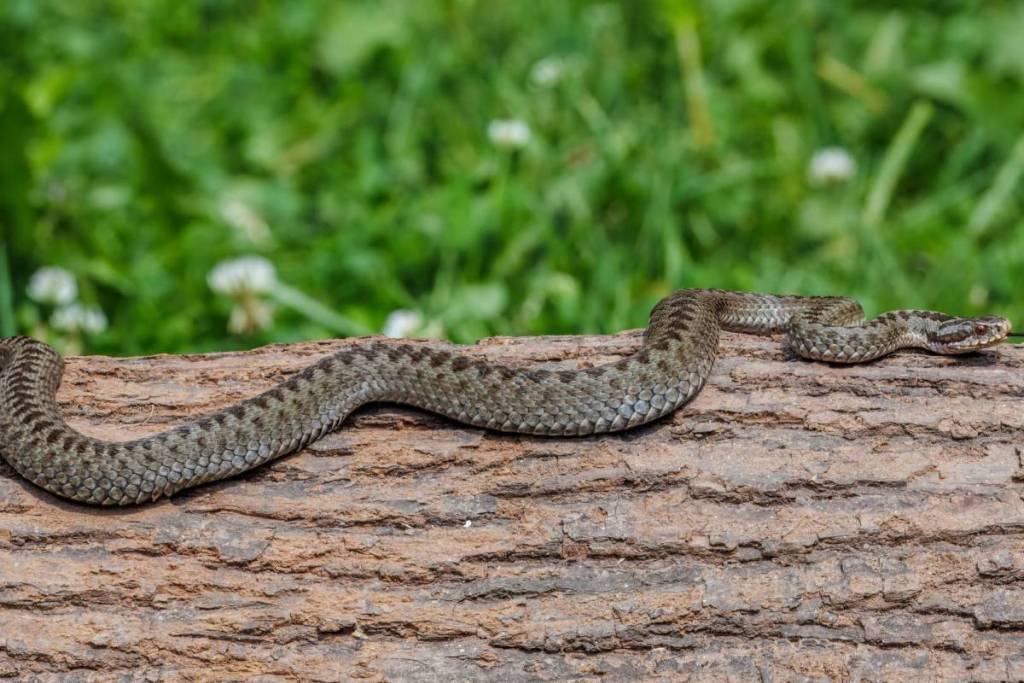
In addition to vast fens, the Dwingelderveld is home to a rare abundance of wildlife. It is the only nature reserve in the Netherlands where all three native snake species coexist: the venomous viper, the smooth snake, and the shy grass snake.
On sunny mornings, these reptiles bask along the dry sand ridges and edges of the heath. Although the viper is venomous, the animals almost always keep a safe distance when humans are nearby. If you walk quietly, with a little luck you might spot some basking vipers.
3,700 hectares of silence and Ice Age fens
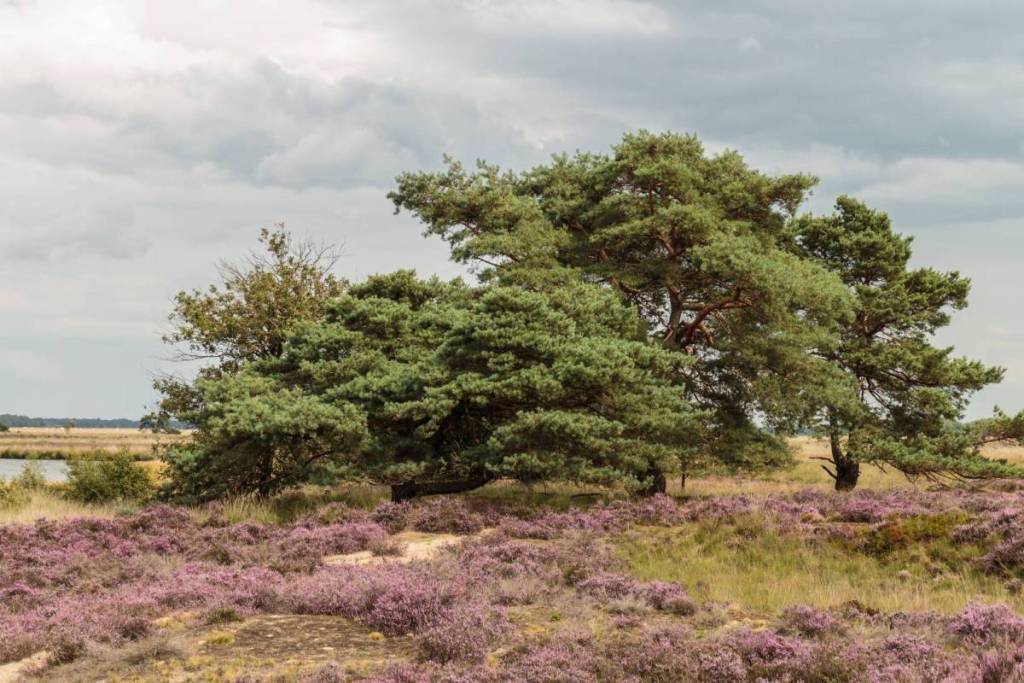
The Dwingelderveld owes its landscape to the forces of the Ice Age. In the low-lying areas lie more than forty round ponds. These are pingo ruins: deep craters that formed when underground ice mounds melted and the ground collapsed.
These wet ravines, together with dry sand ridges, form a unique 3,700-hectare marsh and heathland area. To prevent the area from becoming overgrown with trees, two traditional flocks of sheep graze the heath daily. This preserves both this extraordinary Ice Age landscape and its characteristic silence.