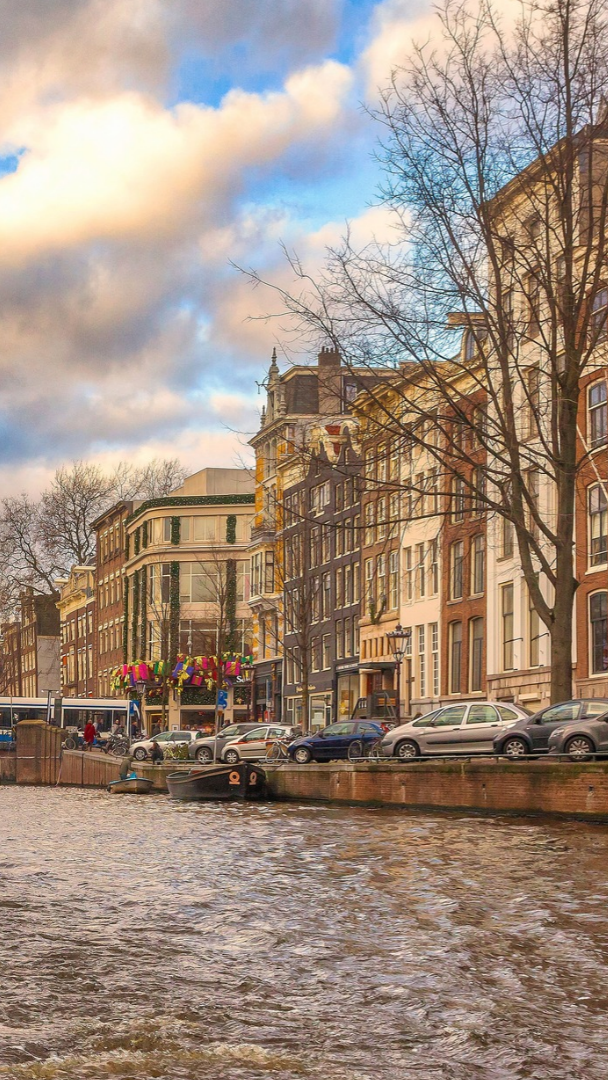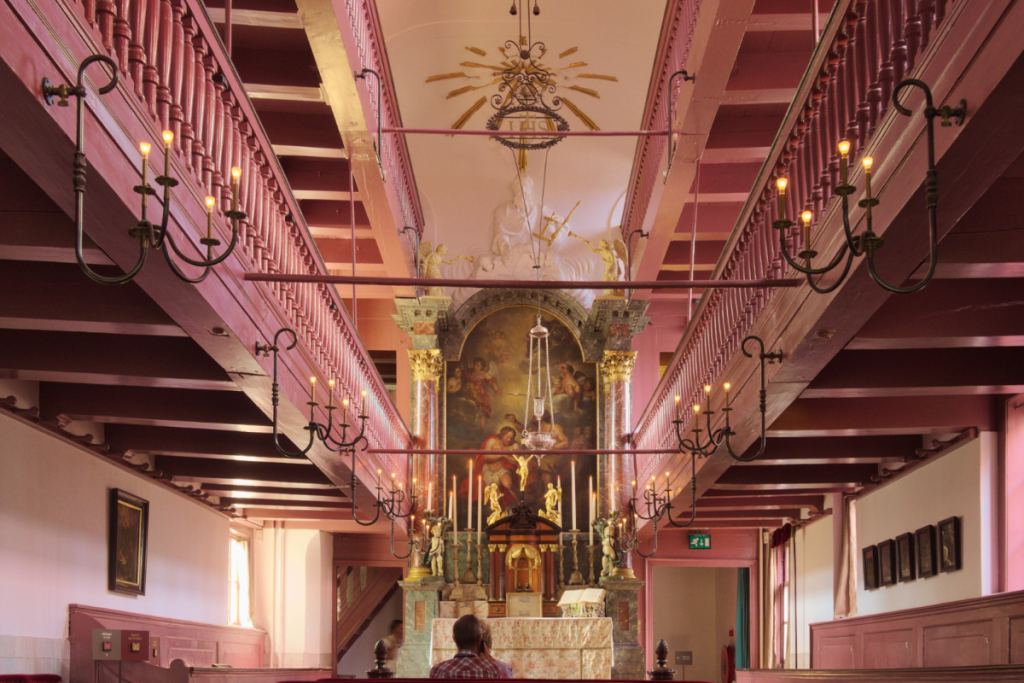

From the outside, Oudezijds Voorburgwal 40 looks like an ordinary Amsterdam canal-side house. Yet behind this facade lies one of the capital’s best-kept secrets. In 1663, stocking merchant Jan Hartman secretly built an entire church here across three attics, because the city council strictly prohibited public Masses.
More than 360 years later, the bright pink Museum Ons’ Lieve Heer op Solder attracts 100,000 visitors annually as the city’s second-oldest museum. But how did Hartman manage to transform three attics into a fully-fledged church hall right in the middle of the bustling city center, without anyone on the street noticing a thing?
Three attics converted into a single church hall
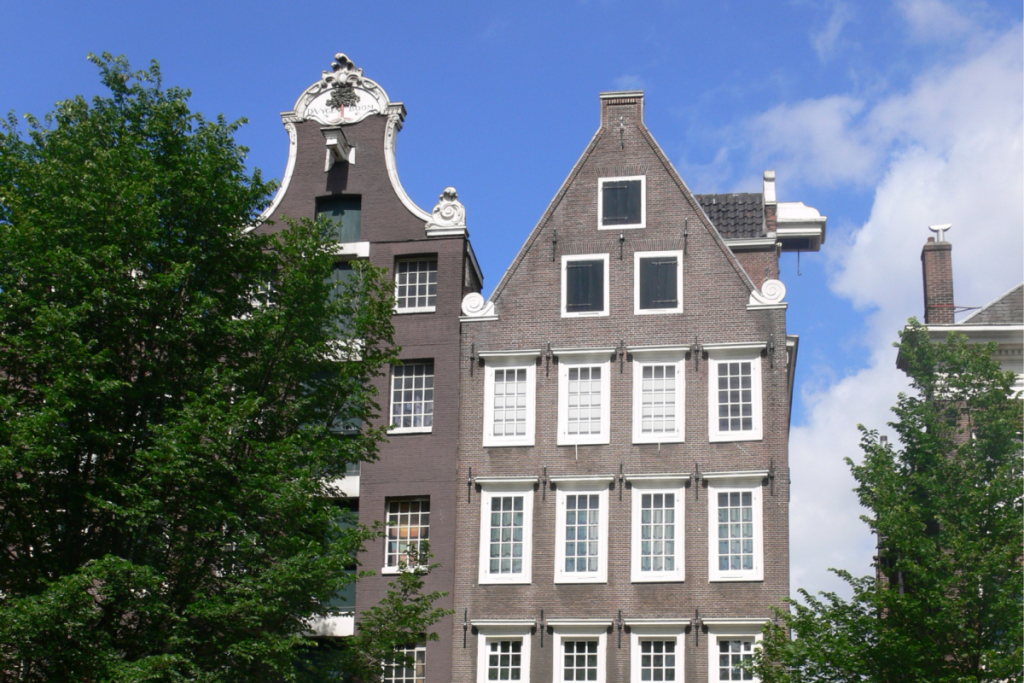
In 1661, stocking merchant Jan Hartman devised a plan that was as audacious as it was ingenious. He bought the canal-side house and immediately tore out all the floors and partition walls on the upper floors. He then connected the attics of his own home and two adjacent buildings. Inside, a completely hidden church hall emerged, featuring rows of wooden benches and two wide galleries directly beneath the roof trusses.
Hartman deliberately omitted any recognizable religious symbols from the facade. The hundreds of churchgoers never entered through the stately front door on the canal. Instead, they slipped through the dark Heintje Hoekssteeg alley and chose an inconspicuous, narrow side door. In this way, an entire religious community slipped silently into the attic, while daily life on the street carried on as usual.
Saved from the wrecking ball in 1887
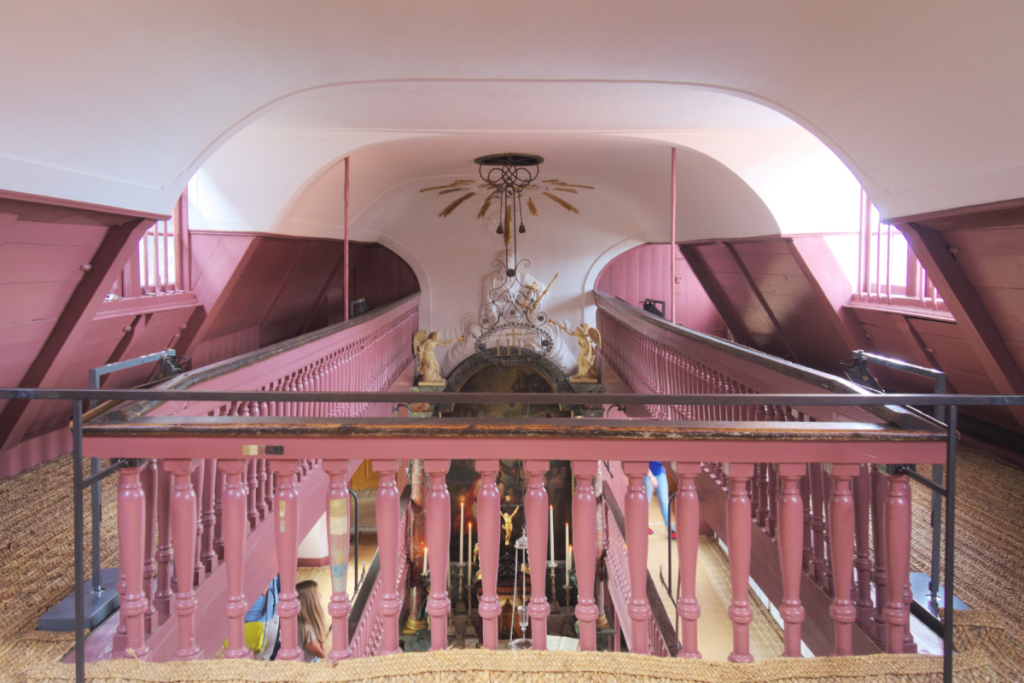
For centuries, thousands of believers climbed up to the hidden attic until Catholics were once again allowed to openly build large places of worship in the late nineteenth century. With the opening of the colossal St. Nicholas Church near the newly built Central Station in 1887, the attic space lost its purpose in one fell swoop. The church council immediately put the monumental canal-side building on the market, giving demolition contractors and property speculators free rein.
A group of concerned Amsterdammers refused to stand idly by and hastily founded the De Amstelkring Foundation. They purchased the building themselves at the very last moment and opened its doors to the general public in April 1888. In this way, these citizens saved the sanctuary from the wrecking ball and gave the capital Amsterdam’s second-oldest museum.
A living sanctuary in the heart of the Red Light District
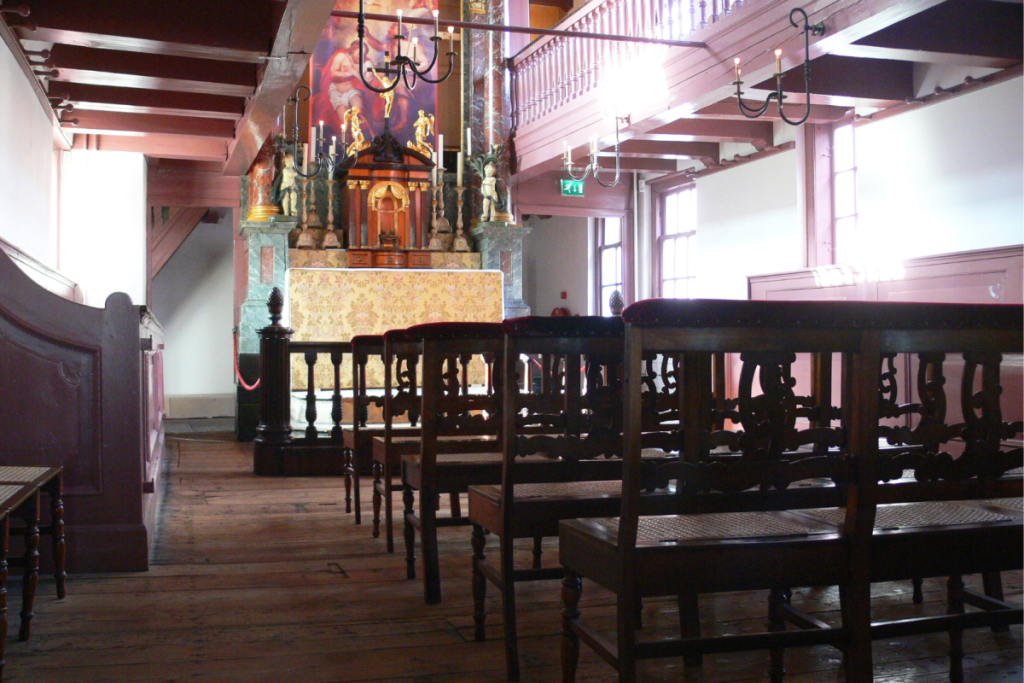
Every year, 100,000 visitors walk up the museum’s creaking wooden stairs. To protect the fragile floors, the management devised an ingenious solution. Visitors purchase their admission tickets in a modern building across the street and walk silently through an underground tunnel beneath the Heintje Hoekssteeg into the historic canal house.
Upstairs, a vibrant sanctuary awaits. Every first Sunday of the month, churchgoers fill the pink wooden pews for the traditional Solder Mass. Singers and priests fill the attic with song and prayer, just as they did in 1663. Thus, a contemporary museum visit and a centuries-old tradition go hand in hand seamlessly at Museum Ons’ Lieve Heer op Solder.