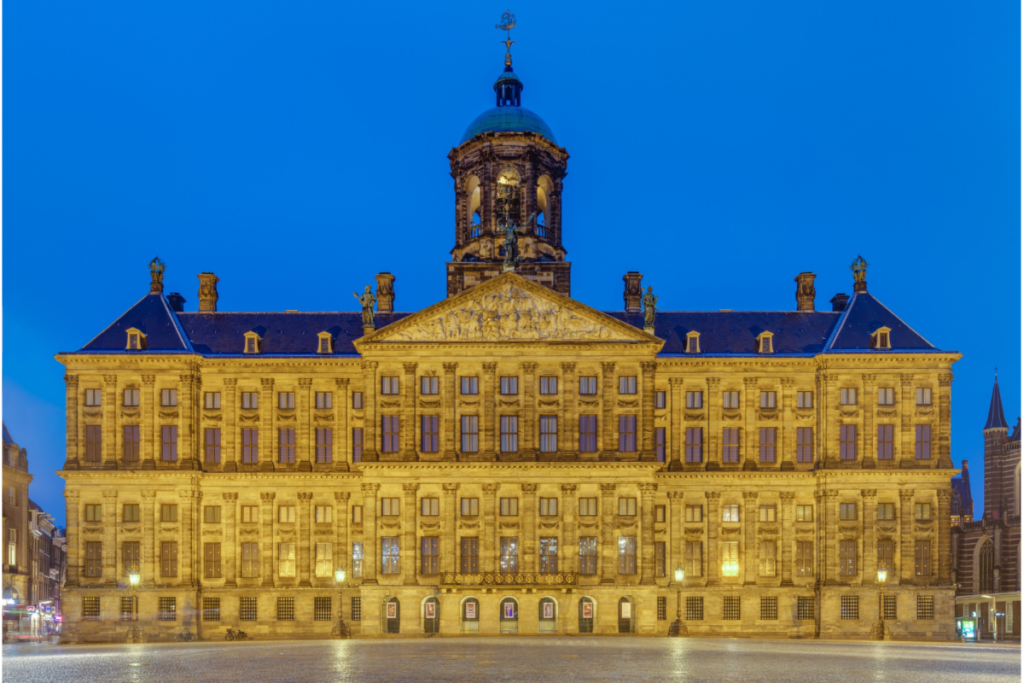

From the outside, the colossal building on Dam Square reveals little of its extraordinary past. In the mid-17th century, it was not a royal residence that was built here, but the proud city hall of Amsterdam’s citizens. For years, elected regents governed the trading city from this marble complex, entirely without interference from a king.
That situation changed in 1808. Louis Napoleon, appointed King of Holland by his brother Napoleon, suddenly claimed the city hall as his residence. The city council was forced to leave, and Amsterdam’s administrative center was transformed into a royal palace in record time.
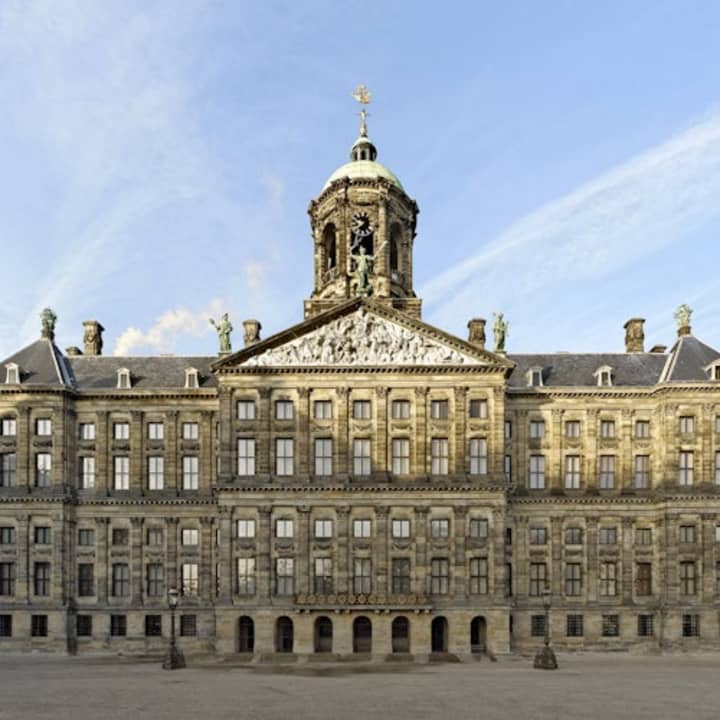
Royal Palace Amsterdam (Koninklijk Paleis): Entry Ticket + Audio Guide
28 October 2026 10:00 + more dates
Koninklijk Paleis Amsterdam
The French Legacy in the Heart of Amsterdam
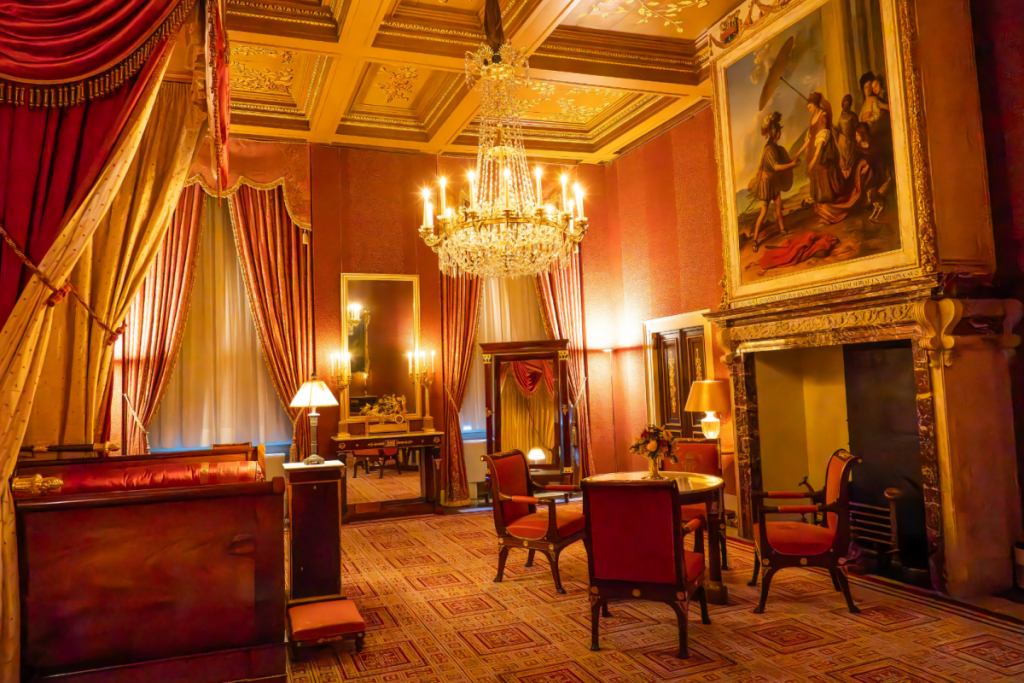
Living in the enormous city hall was no pleasure for the new king. The building had been designed for stern civil servants and the administration of justice, with drafty hallways and ice-cold marble floors. To warm up the palace, Louis Napoleon had large canvases stretched across the walls, heavy curtains hung, and open galleries with wooden walls closed off.
At the same time, he had hundreds of pieces of luxury furniture, tapestries, and golden chandeliers shipped directly from Paris in the latest French fashion. When the French regime fell and Louis fled in a hurry, he left virtually everything behind. As a result, today you’ll find one of the best-preserved French interiors in the world on Dam Square.
The King’s Official Reception Palace
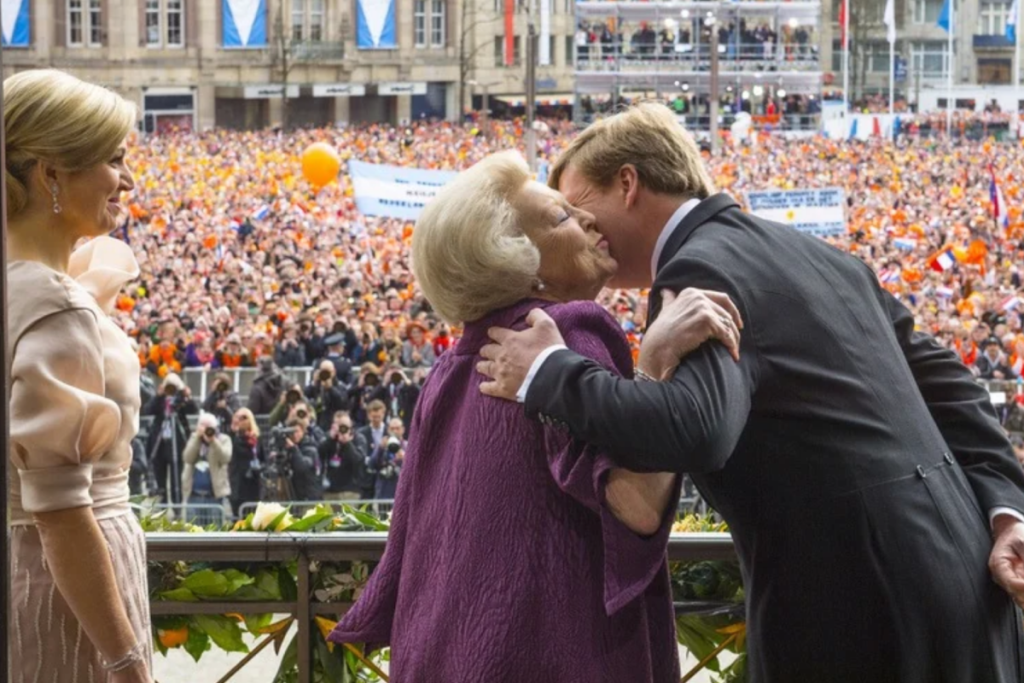
After the French departed, King William I gave the building to Amsterdam, only to claim it back as a royal residence shortly thereafter. Thus, the old city hall became the permanent setting for historic moments: Queens Wilhelmina, Juliana, and Beatrix signed their official abdications here. Today, King Willem-Alexander receives world leaders there during state visits, and national awards are presented there.
Nevertheless, the doors remain open to the public for most of the year. Without a royal invitation, you can simply walk right in to experience a unique combination: giant paintings by Rembrandt’s pupils Ferdinand Bol and Govert Flinck, surrounded by the golden clocks and chandeliers left behind by Louis Napoleon.