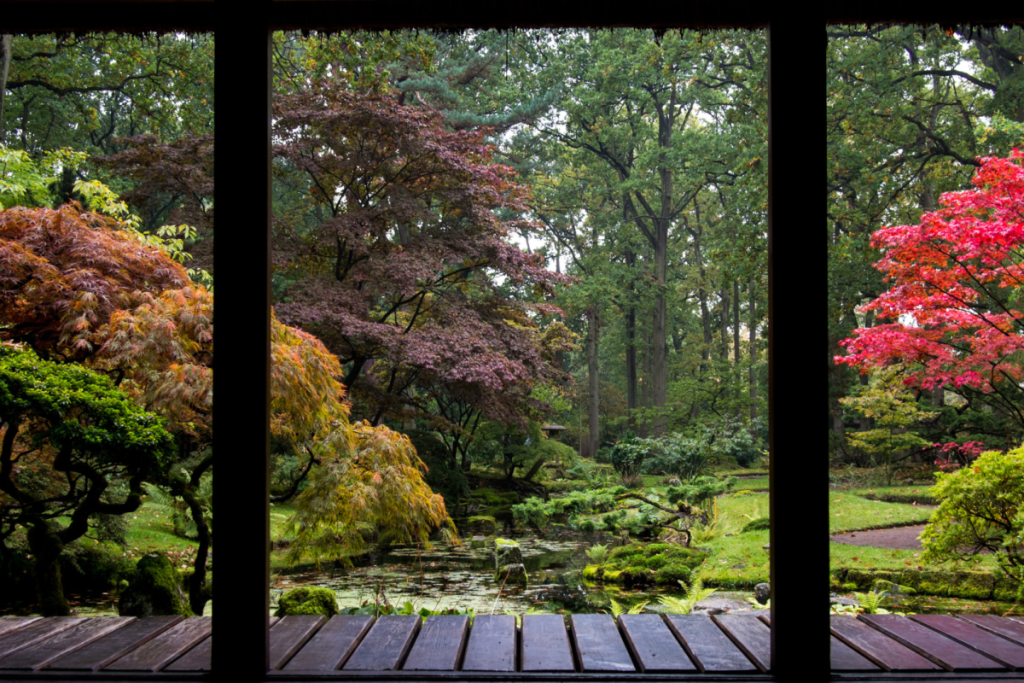

Tucked away on the Clingendael Estate lies a botanical masterpiece that is open to the public for only a few weeks each year. The Japanese Garden was designed more than a century ago with authentic elements imported directly from Japan.
The result is a historic miniature landscape spanning 6,800 square meters where centuries-old moss, rare plants, and traditional architecture blend seamlessly. A stroll here feels like a journey back in time.
The Mystery of the Japanese Garden
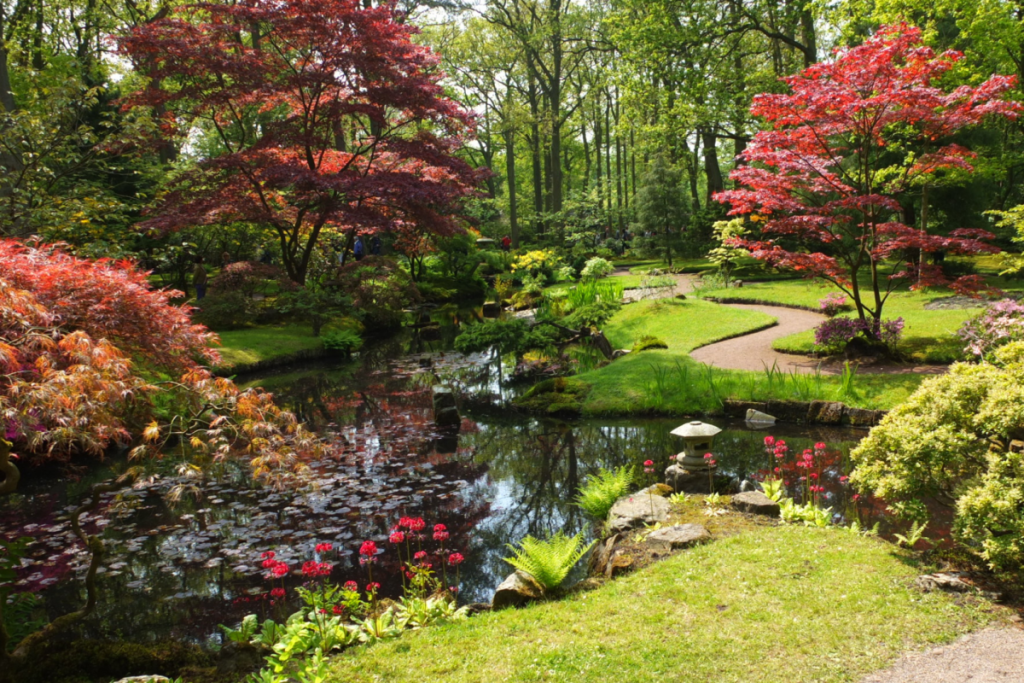
In the early twentieth century, Lady Daisy brought back an impressive collection of antique lanterns, carved water jars, and small wooden bridges to The Hague from her travels through Asia. With the help of landscape architect Theodoor Dinn, she transformed the wooded plot into an authentic miniature Oriental landscape that is now protected as a national monument.
As you stroll across the characteristic dobashi ( earth bridges) , you’ll pass brightly colored Japanese maples, blooming azaleas, and a charming tea pavilion with original shoji sliding panels. The absolute highlight, however, remains the rare, centuries-old carpet of moss that gives the garden its mystical aura.
Discover more at the historic Clingendael Estate
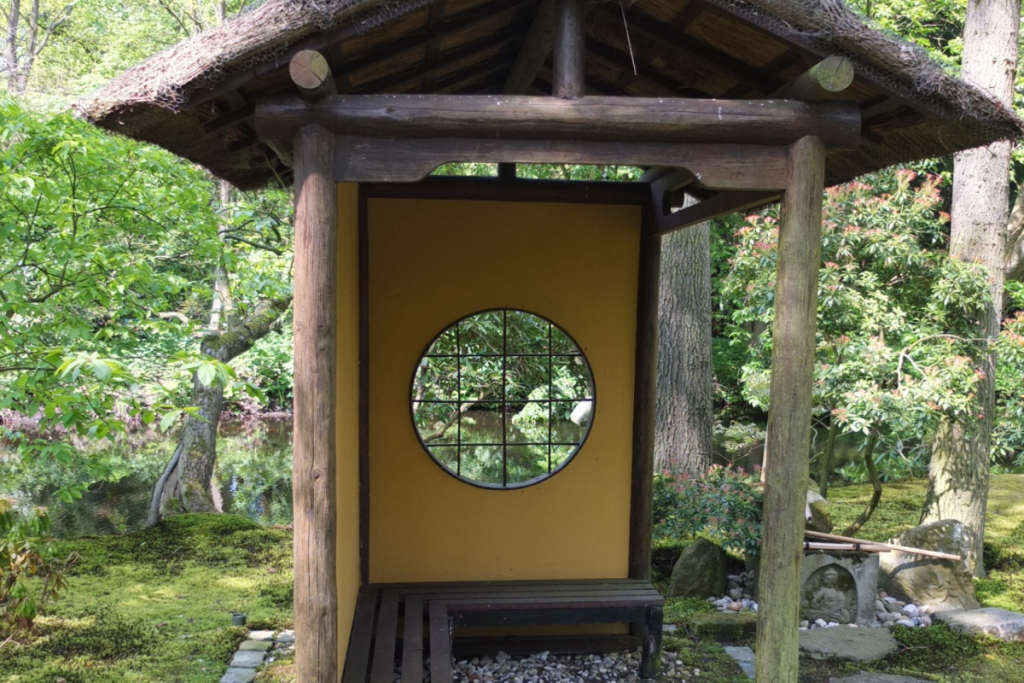
The Clingendael Estate has a history dating back to the sixteenth century. Over the centuries, the park transformed from a French Baroque garden into a romantic English landscape, designed by the famous architect Jan David Zocher. During World War II, the main house even served as a heavily guarded headquarters for the German Reich Commissioner Seyss-Inquart, resulting in a network of bunkers on the grounds.
Today, the 17th-century country house is home to the renowned Clingendael Institute. While the Japanese Garden has limited opening hours, the surrounding estate remains open to the public free of charge year-round.
Plan your visit to the Japanese Garden
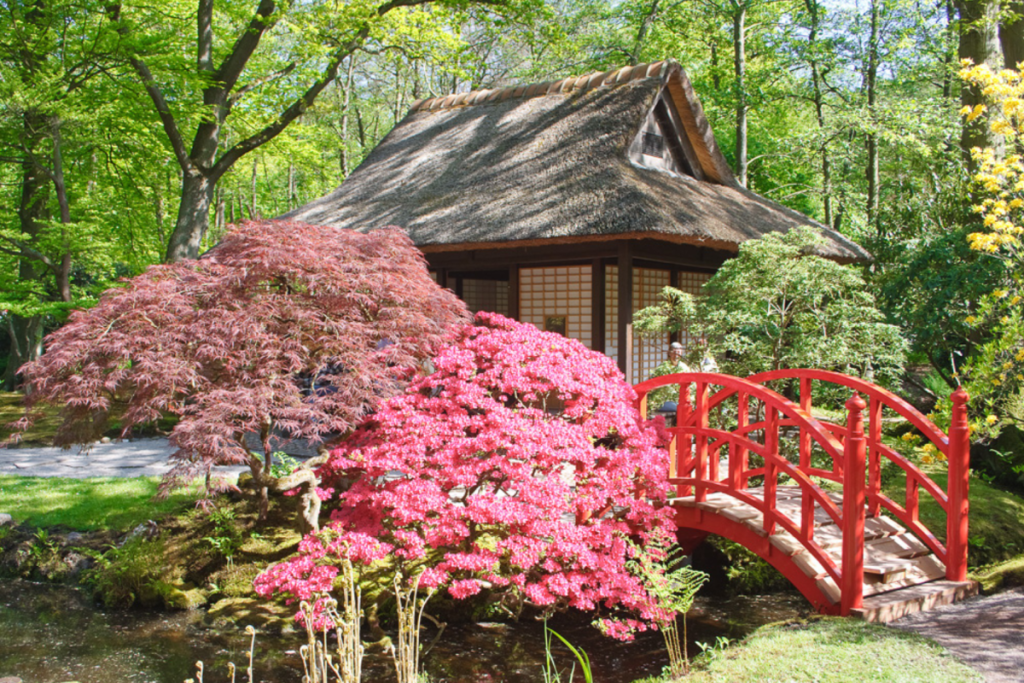
Due to the fragility of the moss carpet, the garden is open only twice a year: for a six-week period in the spring and two weeks in the fall. During the spring opening, you can stroll among blooming azaleas and rhododendrons. In the fall, the park turns a deep red thanks to the Japanese maples.
Admission to the garden and the estate is free. It’s quietest right at opening time at 10:00 a.m. or in the late afternoon, when you can avoid the large crowds.