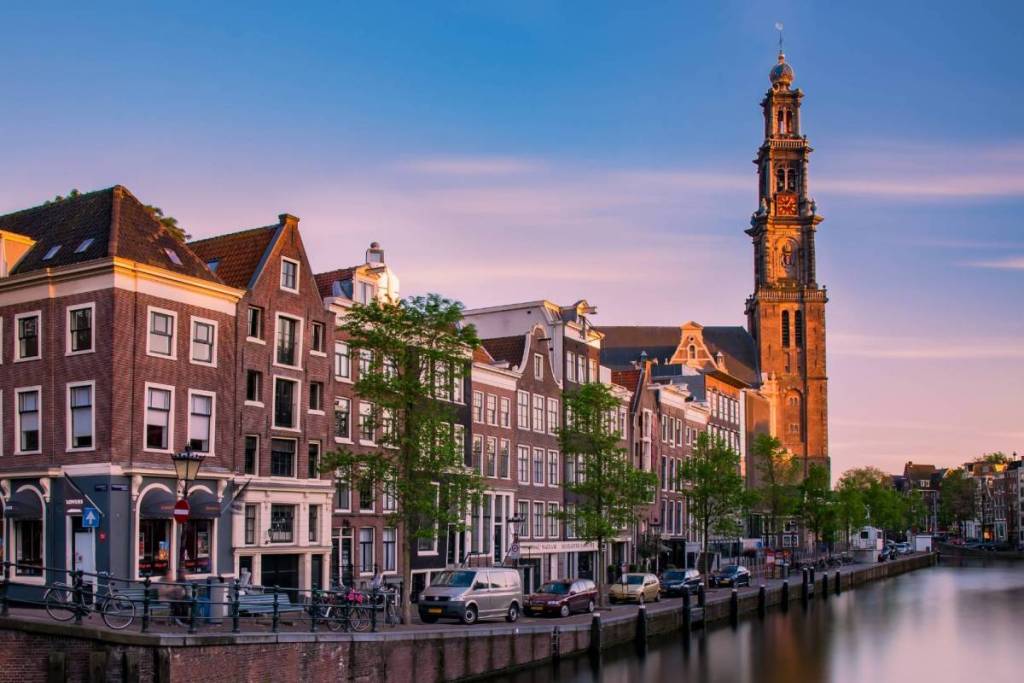

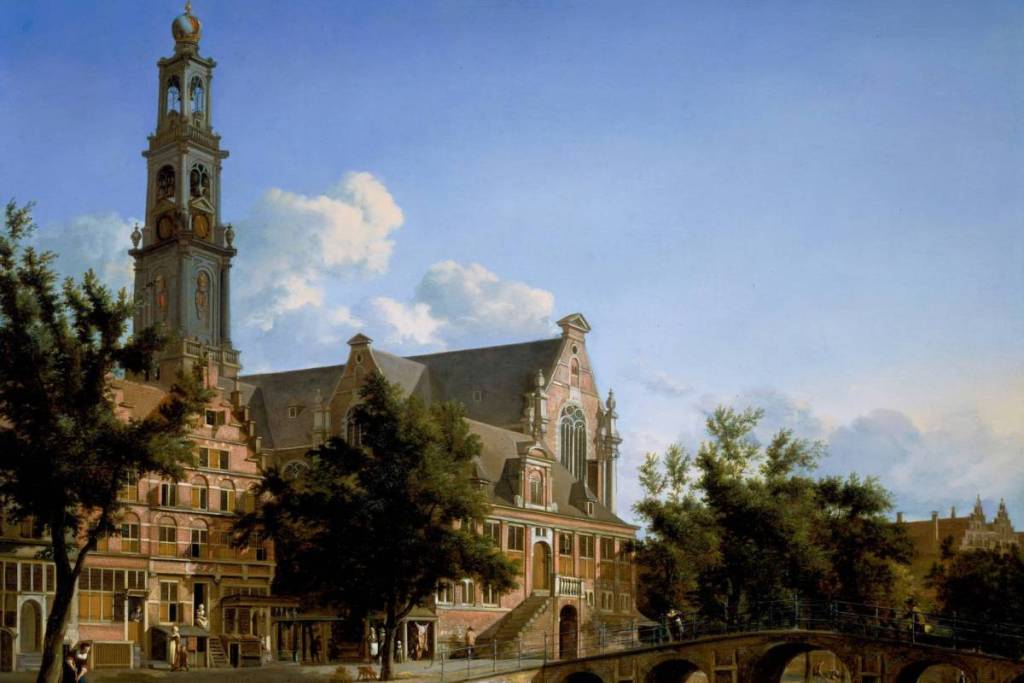
If you’re looking for the most beautiful churches in the Netherlands, you don’t have to travel all the way to the cathedrals of Maastricht or Utrecht. Right in the heart of our capital, directly on the picturesque Prinsengracht, stands the imposing Westerkerk.
Built in the seventeenth century from solid sandstone and brick, this masterpiece has withstood the test of time for four centuries. The building combines the rural tranquility of the Jordaan neighborhood with a fascinating history, but above all, it conceals beneath the church floor the unmarked pauper’s grave of the man who painted *The Night Watch *.
The Mystery of 1669: A Master Painter in an Anonymous Rented Grave
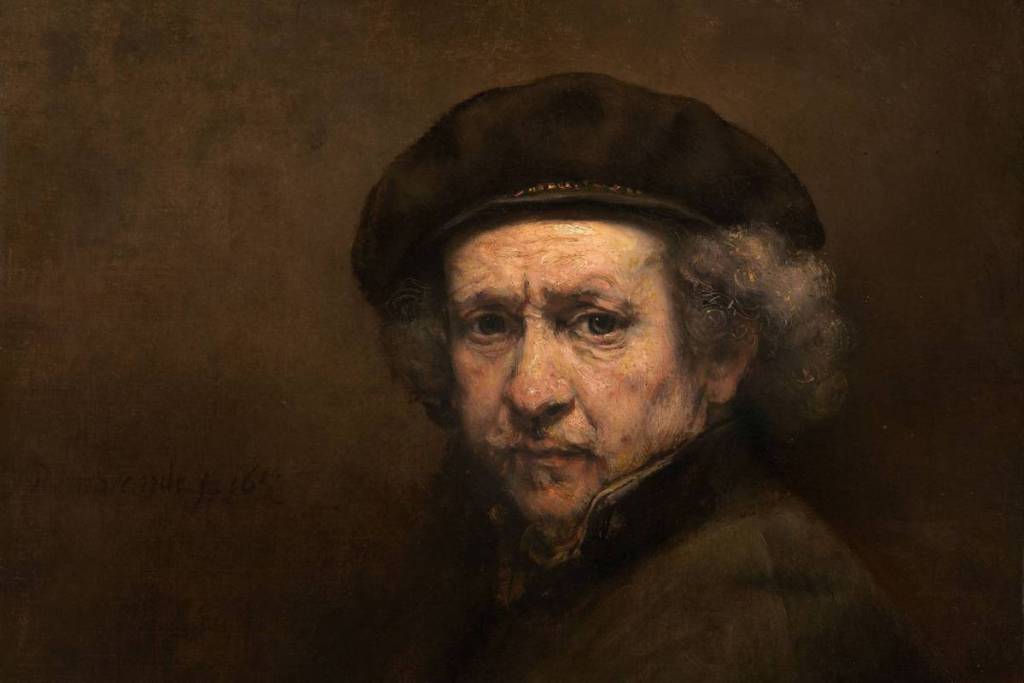
The tragic story behind Rembrandt van Rijn’s final resting place begins in October 1669. Poor and destitute, the famous artist died in a small house on the nearby Rozengracht. Four days later, his coffin was carried into the Westerkerk by sixteen pallbearers for a simple burial.
At the time, the bereaved paid twenty guilders to the sexton. This substantial sum entitled them to a so-called “rented grave”: a temporary resting place beneath the church floor that was eventually cleared to make room for new deceased.
Because the graves were cleared and the bones were scattered after a few decades, the exact location of Rembrandt’s remains has vanished from the history books forever.
Monumental splendor, organs, and the graves beneath the church floor
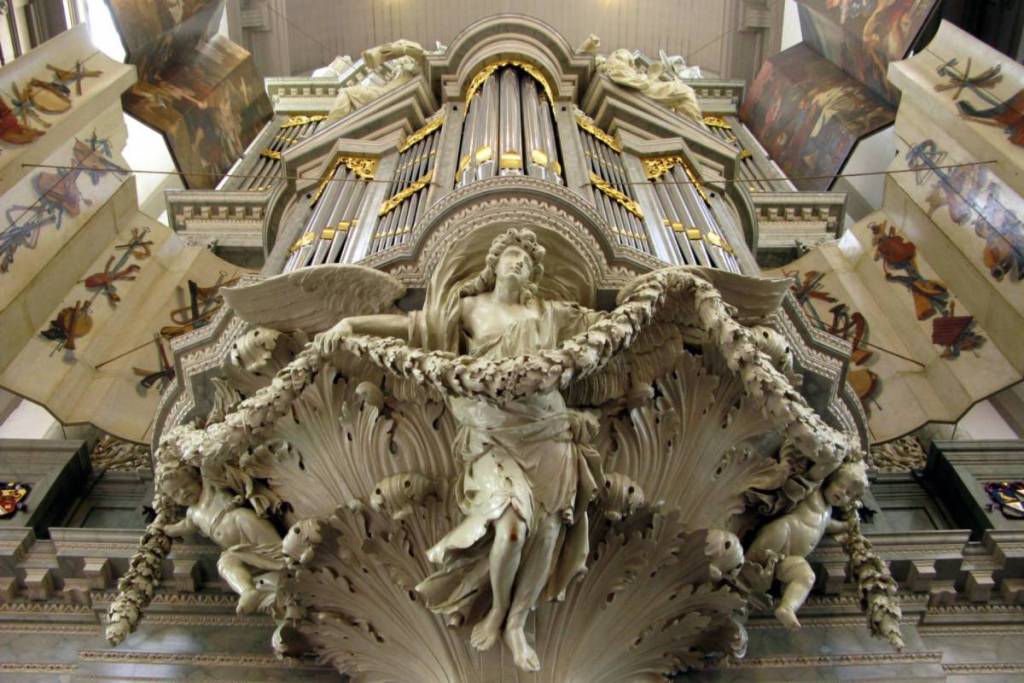
The Westerkerk is far more than just a repository of stories. The building, designed by city stonemason Hendrick de Keyser, opened in 1631 as the city’s largest Protestant church. That architectural splendor is evident not only in its double Greek cross layout but also in its interior design. For example, the historic Duyschot organ from 1681 immediately catches the eye, with its impressive shutters painted by Gerard de Lairesse.
Moreover, Rembrandt is not the only famous name to have been laid to rest in this church. Beneath the massive church floor, cartographer Joan Blaeu, painter Govert Flinck, and gin distiller Lucas Bols also found their final resting places. They are silent witnesses to Amsterdam’s rich past.
The enigma of the north wall
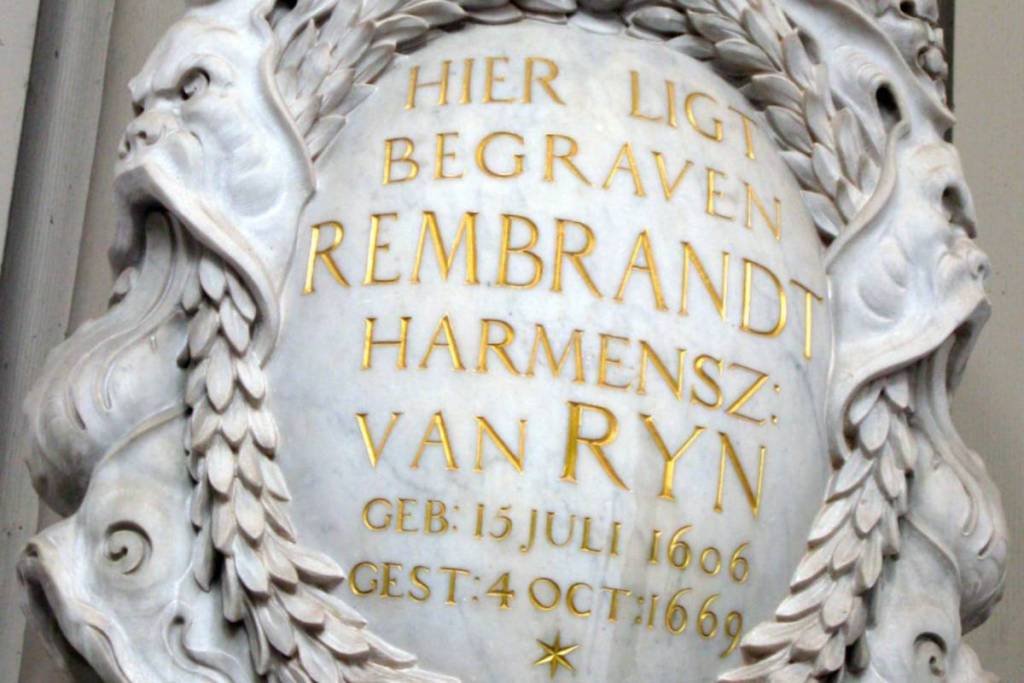
What remains in the church today to commemorate our most famous master painter is surprisingly austere. Walking through the high-ceilinged hall, one finds a quiet testament only in the northern aisle: a bronze commemorative plaque that was not installed until 1906, more than two centuries after his death.
While volunteers use interactive databases to meticulously map the hundreds of other graves beneath the church floor, the exact spot where the master was once laid to rest remains one of the capital’s greatest unsolved mysteries.
Your visit to the Westerkerk
🚆 By public transportation, take tram 13 or 17 from Amsterdam Central Station and get off at the “Westermarkt” stop, right in front of the entrance.
🚗 Are you coming by car? You can park in the nearby Q-Park Europarking parking garage on Marnixstraat.
📍 Prinsengracht 279, 1016 GW Amsterdam
🗓️ Monday through Friday (11:00 a.m. – 3:00 p.m.)
⏳ 30–45 minutes
💵 Free admission (voluntary donations appreciated)