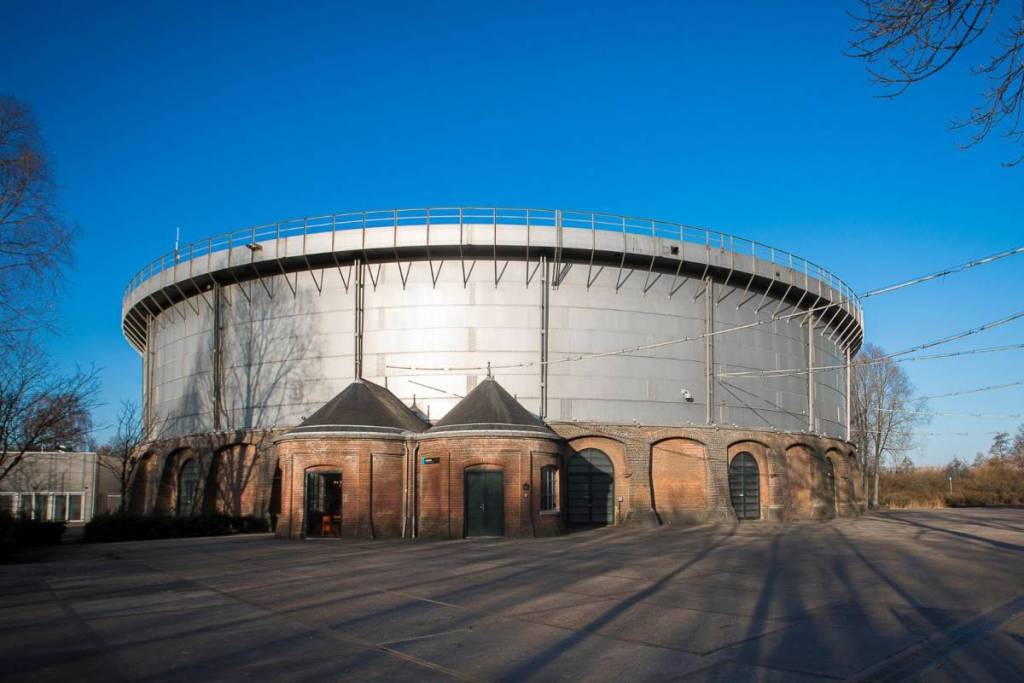

Where a century ago people stayed away out of sheer fear of poison and explosions, today lies the beating cultural heart of Amsterdam. The monumental Gashouder reopens with an underground space capable of accommodating 3,500 visitors. A spectacular setting for live music and art, right on the spot where coal gas was produced day and night starting in 1885.
A ticking gas bomb next to the city
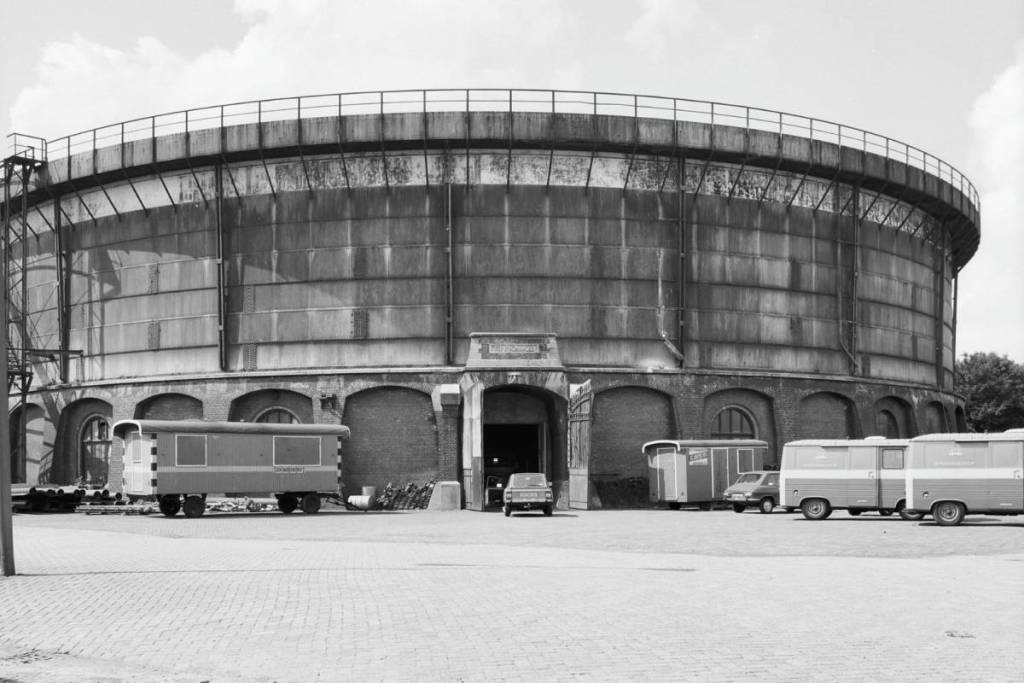
In 1885, the Imperial Continental Gas Association commissioned the construction of the Westergasfabriek to illuminate Amsterdam’s dark streets. Architect Isaac Gosschalk designed elegant brick buildings, but the real hard work took place behind closed doors. Hundreds of workers shoveled coal day and night into red-hot furnaces to produce city gas. The work was grueling, unhealthy, and life-threatening.
In 1903, the absolute centerpiece of the site was erected: the gigantic round gas holder. With a capacity of no less than 100,000 cubic meters of flammable gas, nearby residents watched with bated breath. That is, until Groningen struck an enormous natural gas pocket. Within a few years, the entire Netherlands switched over, causing Amsterdam’s gas tap to be turned off for good in 1967
How squatters and ravers saved the monument
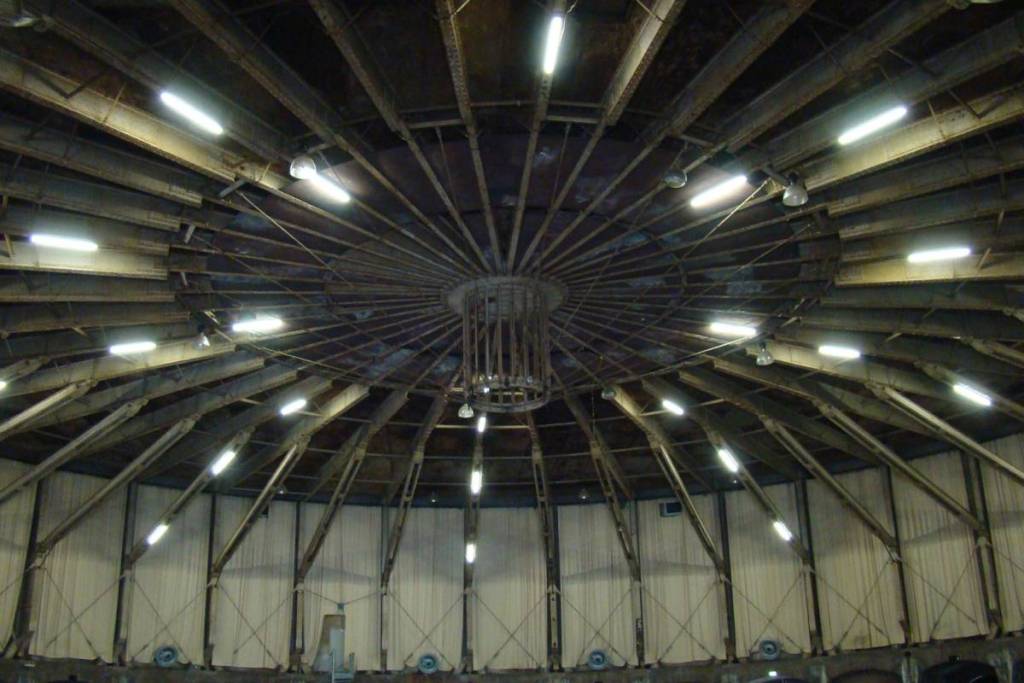
After its closure in 1967, the site turned into an inaccessible no-man’s-land. The soil was contaminated with tar, cyanide, and heavy metals, making demolition and new construction prohibitively expensive. The historic complex fell into disrepair for decades, serving as a storage facility for the municipal energy company.
In the early 1990s, artists and theater makers discovered the magical emptiness of the remaining gas pit. The Holland Festival broke the spell in 1993 with a legendary performance of *Faust*. Four years later, in 1997, the very first edition of Awakenings definitively blew the dust off the iron dome. Overnight, the dark industrial echo chamber transformed into the most famous techno temple in the Netherlands.
From tech bunker to cultural venue
After decades of sporadic rentals and nighttime raves, the Gashouder is taking a completely new direction. The industrial monument has reopened as an independent cultural venue with space for 3,500 visitors. To make this expansion possible without compromising the historic riveted roof, builders excavated a gigantic basement. Visitors now descend past steel sheet piles and undulating aluminum panels to reach the coat check areas and lounges.
Only then do you enter the historic arena above. It’s been a long time since only bone-crushing beats echoed there. From intimate concerts on mattresses to performances by Skepta and orchestral pieces by Stravinsky: the monument combines its raw industrial past with the city’s most diverse programming.