
For decades, the Netherlands swore by familiar classics from the fry-up counter. Anyone with a quick hunger would grab a croquette from the wall at FEBO or pick up a hot HEMA smoked sausage. Back then, shawarma shops served their meat neatly in a pita bread or on a plate.
In 2003, that street scene changed forever thanks to Cape Verdean barber Nataniël Gomes. Between haircuts, he didn’t feel like dealing with individual rolls, so he asked his neighbor across the street for a practical lunch. That simple request led to a full-blown revolution.
A casual lunch turns into a bestseller
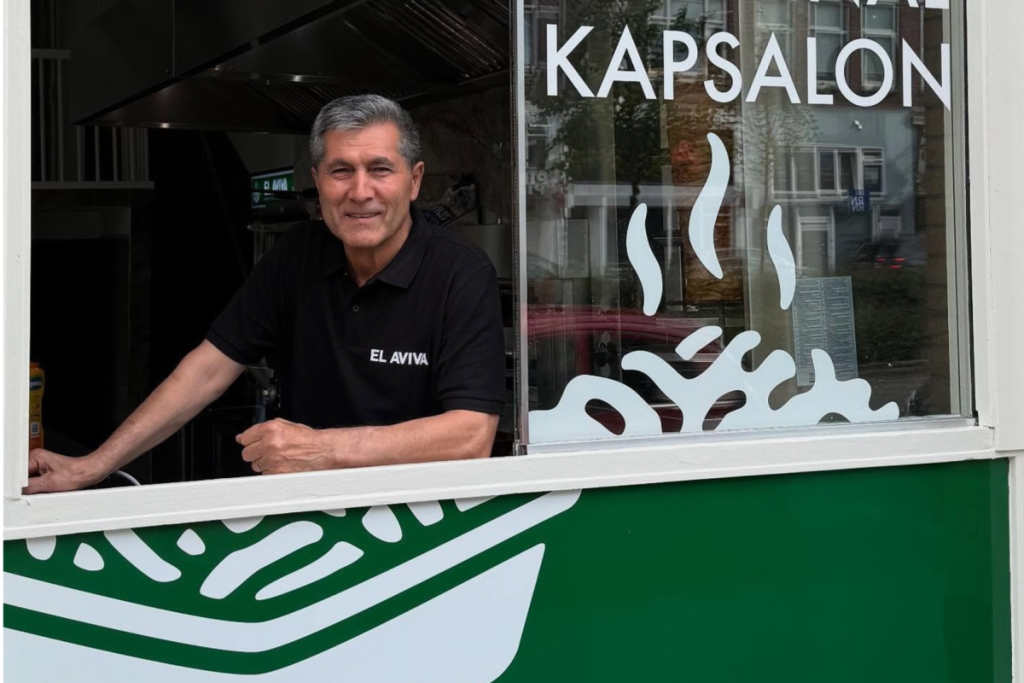
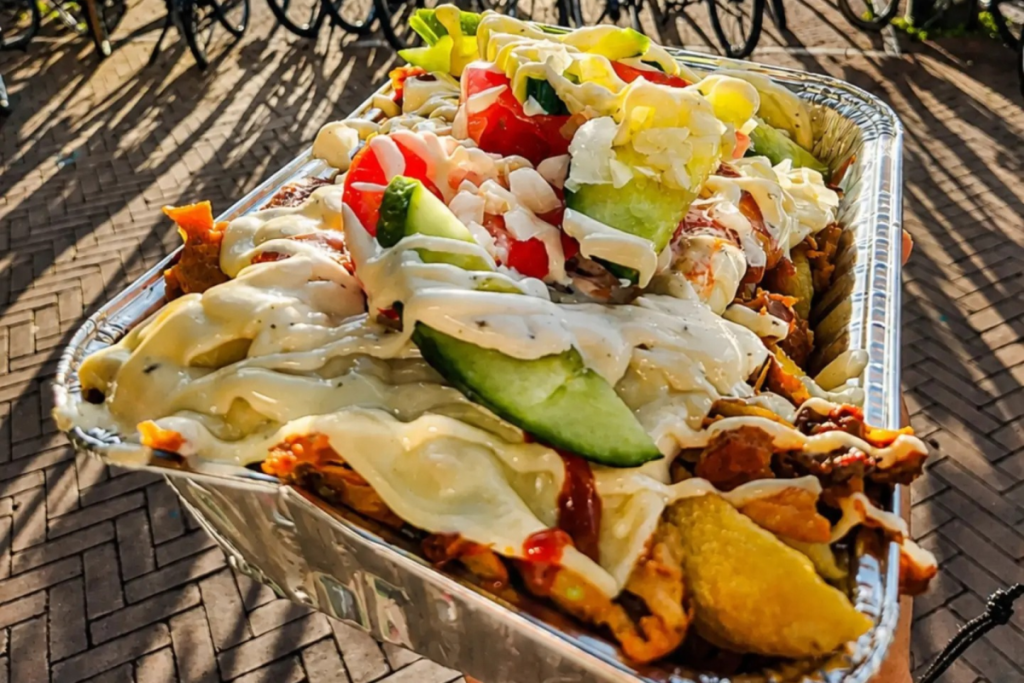
On Schiedamseweg, Nataniël Gomes asked shawarma boss Dervis Bengü to throw all his favorite ingredients into a single metal takeout container. First, a generous layer of crispy fries, followed by a mountain of freshly sliced shawarma. Bengü then briefly placed the container under the oven with a thick layer of Gouda cheese. Topped with iceberg lettuce, tomato, sambal, and a generous splash of garlic sauce, the prototype was ready.
Customers in the shop saw the container and wanted to try it too. Soon, people at the counter were routinely asking for “that container from the barbershop.” Bengü then added the dish to the menu permanently. He didn’t get rich from it, though. Before he could secure a patent, shawarma shops throughout the Netherlands were already selling the recipe.
On every menu in the Netherlands in no time
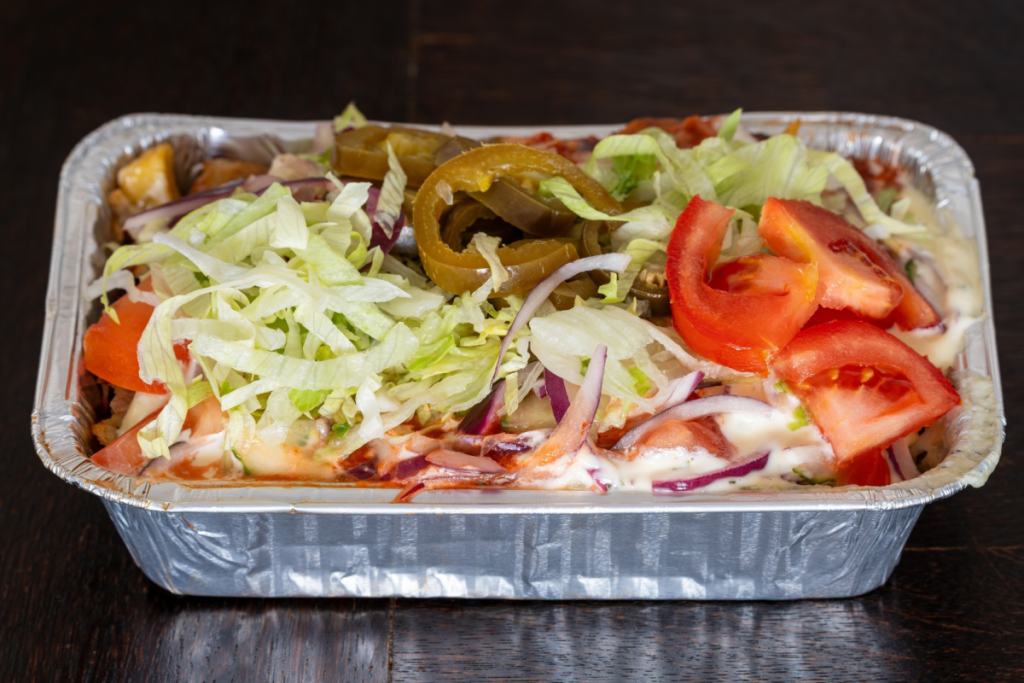
The concept spread like wildfire outside Rotterdam. Grill rooms and cafeterias in cities like The Hague, Utrecht, and Amsterdam saw the enormous demand and immediately added the dish to their menus. The aluminum tray proved ideal for taking the food home piping hot.
Within a few years, the hair salon went from being a local novelty to a national standard. In addition to the traditional shawarma, snack bars soon began offering variations with döner, chicken, or falafel. With an average of about 1,800 calories, the container became notorious for its calorie count, but at the same time grew into one of the most popular snacks in the country.
Dutch cultural heritage with global success
What once began as a simple order at the counter received the ultimate recognition in 2020. The Dutch Intangible Cultural Heritage Knowledge Center officially added the barbershop to the national heritage list. The organization praised the container as the perfect symbol of modern food culture: a meeting of Rotterdam’s cultures that has become an indispensable part of the cityscape.
Its reputation wasn’t limited to the Netherlands. Dutch expats and travelers took the concept across the border. Today, the familiar aluminum tray can be found everywhere from Belgium and Germany to small eateries in Nepal and Indonesia. As a result, the Rotterdam experiment grew into one of the rare Dutch culinary exports with a global reach.